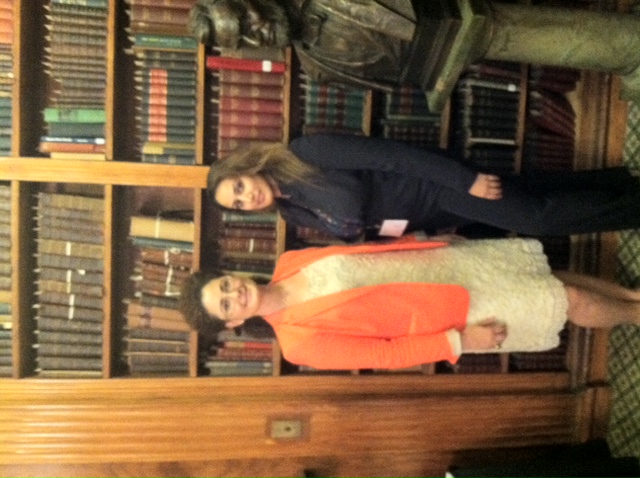
#EAS12=Envision Arabia: Society, Science, #Tech, #Law, #Educ, #Econ #ArabDev, Culture, #HumanRights

This weekend PITAPOLICY attends the 2nd Annual Envision Arabia Summit in New York and will be instructing a Economic Development in the Arab World Workshop.  Envision is organized by the Arab Development Initiative: a group of thirty students and recent graduates, all with a passion for development work in the Middle East.  They are primarily based in Montreal, Canada – however, their international team of ambassadors facilitate our long-distance work. 

The Economic Development Workshop will be building on the business practices from PITAPOLICY Consulting; essays on the PITAPOLICY, Huffington Post, and World Bank blogs; and the lessons learned from co-sponsoring the #ArabDev chats organized by Al Mubadarah. We look forward to sharing how the positive experience got even better with students’ project proposals.

In the meantime, it is with great pleasure to reshare PITAPAL, Chris Schroeder’s, latest piece on tech entrepreneurship in the Arab world. This was originally posted on PandoDaily and continues highlighting Schroeder’s venture capitalist/entrepreneurial observations.  His profile of Ms. Yasmin Elayat echoes the poignant discussion that Altmuslimah Founder & Editor, Asma T. Uddin, had with Yasmin Elayat in 2011.  

The New Middle East: Women at the Center of a Startup Ecosystem, Part 4

By: Chris M. Schroeder

Source: PandoDaily

It’s pretty hard to think of a great consumer facing platform that isn’t, by its nature, social. Should it be surprising, then, that coming off of the Arab Spring uprisings, so often coordinated and communicated through Facebook and Twitter, women entrepreneurs in the Middle East look at consumer-facing platforms and social networking from a unique perspective?

Yasmin Elayat certainly does. Born and raised in Silicon Valley and the daughter of a successful tech entrepreneur, she visited Egypt throughout her childhood each year for three months at a time. In 1997, when her grandfather in Cairo passed away, she and her family decided to move to Egypt. In 2001, studying computer engineering at Santa Clara University at the time, she transferred to the American University of Cairo. Her passions of marrying computer technology with storytelling and interactive design took her later to NYU for a Master’s degree. But the protests in Tahrir squared convinced her to return to Egypt for good.

“In February 2011, I took a huge leap of faith,” says Elayat. ”[I] quit a great job in New York, and moved to Cairo to live off my savings and work full-time on what was essentially an art project that I really believed in.” [Click here to continue]

Leave a Comment

Filed under Analysis, PIDE (Policy, International Development & Economics), Technology

An Eager Iran & Hesitant Egypt: Relations Before & After the Arab Spring

PITAPOLICY kicks off October with an analysis by Ahmed Morsy’s on the relations between Egypt and Iran pre- and post- the Arab Revolution. This article was first published on Muftah.org

An Eager Iran & Hesitant Egypt: Relations Before & After the Arab Spring

By: Ahmed Morsy*

In the wake of the Egyptian revolution, Iran has sought to capitalize on the country’s new Islamist government to forge closer ties between the two nations. Egypt has, however, hesitated to embrace Iran. Indeed, any future alliance between the two countries remains fraught with challenges. The explanation for this can be found in the historical relationship between the two countries, as well as in Egypt’s strategic alliance with the United States and other Arab states that staunchly oppose Iranian influence in the region.

A Historical Overview of Iranian-Egyptian Relations

Egyptian-Iranian relations have included periods of competition and cooperation, friendship and enmity. Prior to the Iranian revolution, the two countries enjoyed close relations influenced by the personal friendship between Egyptian president, Anwar al-Sadat, and Iranian shah, Muhammad Reza Pahlavi. The two leaders shared common interests in building their nations, held a pro-Western bias during the Cold War, and were anxious about the rise of domestic Islamist movements.

After the overthrow of the Shah and ascendance of Ayatollah Ruhollah Khomeini, the Egyptian-Iranian relationship changed into one of distrust and bitterness.  The deterioration grew out of several factors, including Khomeini’s condemnation of the Egypt-Israeli peace treaty, the close relationship between Sadat and the United States, Egypt’s decision to host the ousted Iranian Shah in Cairo, and the Egyptian government’s refusal to hand the Shah over to the revolutionary regime in Tehran. After Sadat’s assassination, one of Tehran’s streets was named after his assassin, Khaled al-Islambouli. In response, Egypt cut all ties with the Iranian government.

Iranian support for groups like Hezbollah and Hamas alienated the Egyptians further and was a factor in Egypt’s decision to support Saddam Hussein’s war against Iran in the 1980’s. Iran’s revolutionary rhetoric and presumed influence over the Gulf’s Shiite population pushed Egypt to create a closer relationship with Saudi Arabia to counterbalance Khomeini’s evolving regional aspirations.

After Khomeini’s death, the Iranian leadership began a new path toward reconciliation with neighboring Gulf States. Under the leadership of presidents Akbar Hashemi Rafsanjani and later Seyyed Mohammad Khatami, Iran focused on developing commercial and trade relations with its Arab neighbors and the region as a whole.

Iran’s new approach to the region also extended to Egypt, though the pace of engagement was slower and less successful as compared to the Gulf States. After an extended period of stagnation, relations finally moved forward following a phone call between Presidents Mubarak and Khatami in June 2000. A series of goodwill gestures followed, including a decision from the Tehran City Council to entertain Khatami’s request to rename the street for Sadat’s assassin as “intifada. The move was hailed by Egyptian parliamentarians, including the Muslim Brotherhood’s then-leader in Parliament and current Egyptian President, Dr. Mohamed Morsi. At the time, Morsi said “there was abundance of goodwill between the two countries before Tehran made this move, perhaps the path is now open to strengthen ties between them.”

Other developments followed. This included a meeting between Presidents Mubarak and Khatami at a UN technology summit in Geneva where they exchanged views dubbed “very important,” and an invitation for Mubarak to attend the D-8 economic summit in Tehran for developing nations.

After Mahmoud Ahmadinejad became president in 2005, the Iranian government continued efforts to normalize relations with Egypt. In 2007, Ahmadinejad said “We are determined to pursue normalization of relations with Egypt, and if the Egyptian government declares its readiness, before the working hour is over today, we are willing to open Iran’s embassy in Cairo.”

Despite these gestures of friendship, Mubarak remained unprepared to pursue better relations with Iran. The Egyptian President enjoyed strong relations with the Gulf monarchies, especially the Saudis, and had built a strategic alliance with Iran’s adversaries, the United States and Israel. For the Mubarak government, maintaining these connections was far more important than reestablishing diplomatic relations with Tehran.

Egypt’s Uprising: Any Prospects for Conciliation?

Shortly after the start of the Egyptian revolution, on February 4th, 2011, Ayatollah Ali Khamenei made statements that compared the uprisings in Tunisia and Egypt with Iran’s Islamic revolution. Khamenei further described the upheaval in the region as ‘liberating the Islamic movement’ and dealing a blow to the United States.

Khamenei’s comments were intended, in part, to win over the rising Islamist parties in these countries. Unsurprisingly, these statements spurred negative responses from Mubarak’s foreign minister, Ahmed Aboul Gheit. Aboul Gheit condemned Khamenei’s comments as “revealing feelings of hatred and hostility toward Egypt.” The Brotherhood also rejected the Supreme Leader’s statement, insisting it was the ‘Egyptian people’s revolution.”

After Mubarak’s fall, Tehran believed a new relationship with Cairo would soon follow.  On April 4th, 2011, Egypt’s new foreign minister, Nabil Al Araby, met with the head of the Iranian Interest Section in Cairo. During the meeting, Al Araby “affirmed that Egypt is opening a new page with all countries including Iran, and the Egyptian and Iranian peoples deserve having relations that reflect their history and culture, provided they are based on mutual respect for the state sovereignty and the non-interference whatsoever in the internal affairs.”

Two months later, an Egyptian delegation of intellectuals, journalists, and businessmen visited Tehran. Dubbed the “people’s diplomacy delegation,” Ahmadinejad and several key government officials received the delegation. Together, they discussed opportunities for restoring ties between the two countries, with Ahmadinejad expressing his willingness to support and share Iran’s industrial and technological expertise with Egypt. Ahmadinejad also took the opportunity to speak of ‘enemies’ opposing renewed relations between the two countries. Two months later, a delegation of Iranian parliamentarians arrived in Cairo.

Iran welcomed the July 2012 inauguration of Mohamed Morsi as Egypt’s first Islamist President. Ahmadinejad spoke with Morsi to wish him success and invited the new President to the Non-Aligned Movement (NAM) conference in Tehran in late August.

Several days before the Morsi-Ahmadinejad call, Iran’s Fars News Agency, published a fabricated interview with the newly elected Egyptian president claiming he was ‘interested in closer ties with Iran’ and ‘sought revisions to the Camp David Accords with Israel.’ The Egyptian government denied these reports and asserted that “legal action will be taken against the Iranian Fars news agency, which fabricated an interview.” The FARS news report received another blow after Morsi made public comments pledging to be ‘president for all Egyptians,’ and ‘to honor all international treaties.’

The Iranian Rationale

Iran’s response to the Egyptian revolution has several potential motivations. First, Tehran may hope to capitalize on post-Arab Spring realities and the rise of Islamists to advance its narrative of an ‘Islamic Awakening’ and to bolster anti-Western sentiments among regional governments.

Second, Iran’s anxious attempts to renew relations with Egypt may also be attributed in part to escalating pressure and international sanctions against Tehran.  The U.S. and the EU have tightened sanctions on Iran, with particular focus on financial sectors and the oil industry. By re-establishing relations with Egypt, Iran may hope to win safe access to the Suez Canal and bypass sanctions by opening a new market for its goods.

Finally, in light of the worsening conflict inside Syria, Iran may be pursuing an alliance with Egypt to counteract the potential loss of its Syrian ally. The Syrian crisis has left Iran standing alone while other regional players side with the Syrian opposition.

The Egyptian Position

Morsi’s decision to attend the NAM summit in Tehran was met with concern from the Western media, who saw it as a victory for Iran. Egypt has responded with an outreach strategy to reassure its regional and international partners that Morsi’s stopover in Tehran – after a state visit to China – does not signal a shift in Egyptian foreign policy and that any possible engagement with Iran will not come at their expense. This strategy likely influenced the U.S. State Department’s decision to downplay Morsi’s Iran visit, stating that normalization of relations between Egypt and Iran is “a national decision (for Egypt) to make.”

Morsi’s speech at the summit criticizing Bashar al-Assad’s regime is further evidence that the President has decided to side with Egypt’s Arab and Western partners over and above the Iranians, who were noticeably displeased with his comments.

Conclusion

Despite the Muslim Brotherhood’s rise, it is naïve to assume that Islamists in Egypt will automatically ally with those in Iran. Egypt’s Islamist movement is predominantly Sunni, as are its Arab allies in the Gulf who share an interest in countering Shiite and Iranian influence in the region. Domestically, the Salafi party, al-Nour, is leading the fight against the spread of Shiism in Egypt. Its members have gone so far as to warn against opening Egypt to Iranian tourism, for fears this would increase Shiite influence and challenge Egypt’s Sunni character.

Egypt’s regional and foreign policy will not change swiftly to embrace Iran. Morsi has continually promised to respect Egypt’s international treaties and maintain its close relationship with other Arab states, specifically Saudi Arabia where Morsi made his first official state visit as president. In addition, Egypt will seek to preserve its strategic relationship with several Western countries and the United States. Most importantly, Egypt’s relationship with the West and the GCC is vital, at least in the short-term, to help Egypt overcome its growing economic crisis.


*Ahmed Morsy is a PhD Candidate at School of International Relations, University of St Andrews.


Leave a Comment

Filed under Analysis, Politics, Uncategorized

PITAPAL Analysis: Talking about Arab Women in Tech=Good Business

Talking about the tech sector might be a niche topic — dare we say treading ‘tech geek’ territory.  Talking about women might be hinting at feminism.  Combining the two topics is just good business. 

PITAPOLICY is excited to post the 3-part series “The New Middle East: Women at the Center of a Start-up Ecosystem” by Christopher M. Schroeder–with his permission.  As a ‘pitapal’, Schroeder has posed great questions and pointed PITAPOLICY towards some thoughtful pieces regarding the start-up community in the Middle East regarding: business challenges, women in tech, and responding to political risk as an investor.  Considering that almost every Arab related topic begins with the epoch of the Arab Spring, it is refreshing to hear about the tech sector in the pita-consuming region because that takes years to burgeon, and doesn’t necessarily rely on the Arab Spring.  In fact, many of the entrepreneur stories are independent of the political events that have transpired.  

Schroeder’s review compiles over 25 years of experience as a venture capitalist, entrepreneur, and advisor.   So it is with great pleasure to post the series below so that pita-consumers can read it in one go.

The New Middle East: Women at the Center of a Start-up Ecosystem

By: Chris Schroeder

Source: PandoDaily

Part 1

Having spent much of last spring touring the remarkable and little-reported-on tech startup communities in the Middle East — from Cairo to Amman to Beirut to Dubai — I was excited to see that no one was rocking this scene more than the women entrepreneurs.

They are running platforms for Arabic translation out of Beirut and eCommerce enterprises in …[click here to continue]

Part 2

As a mentor and advisor to two remarkable ecosystem builders in the Middle East — the region-wide start-up portal and angel investor Wamda and Jordanian incubator Oasis 500 — I see (but take no economic stake in) some pretty astonishing entrepreneurs.  Through them, I discovered two wonderful stories that offer significant opportunities for the Arab speaking world.

May Habib came to her idea out of …[click here to continue]

Part 3

Ask any woman in the Middle East startup community about her greatest challenge, and the first things you’ll hear are familiar to any entrepreneur.  Can I do this?  Will anyone care?  How do I choose from a hundred different priorities?  When do I raise money?  How should I hire?  Can I move fast enough?

Press a little further and…[click here to continue]


Note: Christopher Schroeder is a Washington, DC and New York-based entrepreneur, venture investor and former CEO of the online content and social platform start-up healthcentral.com, which he sold last January.  He has been published by the The Wall Street Journal, Newsweek, Fortune, and several other media outlets.  You can follow him here on Twitter.  He is working on a book that will review the entrepreneur environment in the Middle East that will be coming out in Spring 2013.

Leave a Comment

Filed under Interests, Technology

Cutting Off Aid to Arab World Hurts U.S. Business

This month on PITAPOLICY, we zeroed in on the impact of the Arab Spring on MENA country economies and the strategic focus of implementing development organizations in North Africa, including Egypt.  We conclude this month with a contribution from PITAPOLICY Founder Mehrunisa Qayyum, who argues that cutting off aid to the Arab world actually hurts jobs and business  here in the U.S.  In a later post, Qayyum will review the impact on recipient countries’ local environmental and business performance.


Cutting Off Aid to Arab World Hurts U.S. Business

By: Mehrunisa Qayyum

Congressmen called for cutting aid to Libya and Egypt. If the cry to cut aid had not erupted due to such tragic circumstances, this would be laughable since just last year, Congressman Dreier called for an Free Trade Agreement with Egypt to increase good will. As usual, I got nervous about Congressional threats to cut off aid as a rebuke for negativity in the Arab world. It looked like punishment would be meted out against the whole classroom, and not just against the misbehaved (okay, “degenerate”) kids.

At first glance, it would seem pretty reasonable for a government (like ours) to take a step back from aid pledges to other governments (like Egypt’s or Libya’s) when an international incident involves American deaths. The U.S. prides itself on taking action. Remember when we launched strikes against Sudan and Afghanistan in response to the 1998 Tanzania and Kenyan US embassy bombings? Aside from the 12 American deaths, over 5,000 were injured. Our response involved a lot of firepower. But Al Qaeda got the message — I think.

At second glance, we could simply consider the taxpayer’s perspective. We should not be “spending money that we don’t have” in other countries, as pundit Mike Cafferty asserts.

In February we heard this before when American NGOs faced trouble in Egypt. Political rhetoric called for halting aid to punish Egypt for imprisoning Americans.

However, discontinuing aid might not make pragmatic sense when considering all of our American interests: military, commercial, and agricultural.

Read More … 

Leave a Comment

Filed under Analysis, Interests, PIDE (Policy, International Development & Economics), Politics

Reflections on Libya: Reconstructing Beyond Economic Development

Libya Is Not Iraq

By: Manal Omar


This is the mantra I started repeating last week. It was the only way I could bear the calls, emails, and posts I was receiving from my Libyan friends. The news didn’t only shock me, but it had the potential to devastate me. After a year of traveling across Arab Spring countries, Libya had become my anchor amid the chaos. Despite the many challenges the country faced, I always left feeling hopeful and cautiously optimistic.
The attack on the U.S. consulate, and the death of Ambassador Chris Stevens, threatened to stifle all hope within me. I could not bear the idea that Libya could dissolve into conflict led by violent religious extremism. I had spent the past year insisting that Libya would have its happily ever after. I was not blind to the enormous challenges that lay ahead, but I simply believed that Libya had all the right ingredients to overcome them.
First and foremost the Libyans despise extremism. Throughout the country, Libyans took the time to explain that they were religiously conservative, but equally modern and progressive. Second, the relatively small population coupled with a strong oil economy was a positive combination. – The recent political achievements positioned Libya to move in a direction of a country based on the rule of law. My optimism for Libya has not been from nativity. It was the result of clear benchmarks the Libyans had achieved in the transition process. It was crucial that these achievements not be lost because of the actions of a few.

Yet the developments of Sept. 11, 2012 could prove me wrong. I struggled to quell the feelings of pain, loss, and sorrow that were threatening to suffocate my optimism. 
  
That is when I developed my mantra. 
  
My sense of loss stems in part from my previous trauma of working in Iraq during its own initial days of post-war turmoil.

The attacks in Benghazi slashed open this old wound and revived my worst fears. In truth, I had once been optimistic about Iraq as well. During the early months of 2003, I had spent late nights in Baghdad’s coffee shops, walking around century old streets filled with art, literature, and music that inspired me. But, no sooner than I felt so positive, the horrors unfolding in that country shifted my optimism to dread so often that I had mental whiplash. The result was a hardened approach, where I developed a pragmatic and factual day to day approach. In short, I refused to hold high hopes for Iraq’s future.

That is until I arrived in Benghazi in April 2011. Benghazi was a city brimming with volunteerism and hospitality. I encountered Libyans who were brave to dream about a new future – one free from dictatorship. Most of them were ready to die for that dream. It was an honor to be witness to this new chapter in Libyan history. That year I celebrated Ramadan in Libya, and experienced the exhilaration of the fall of the Qaddafi regime. For that moment I witnessed Libya’s transformation of the dream into a reality.

I shared this moment with Ambassador Chris Stevens, with whom I had the privilege of working in Benghazi while he was the U.S. envoy. We shared the hopeful excitement watching Libya overcome decades of dictatorship.

Though I did not know Ambassador Stevens well, I was immediately struck at his accessibility, and his generosity with his knowledge and advice. It was not uncommon to walk into the lobby of Tebetsi and find him sitting in the lounge, chatting with various Libyans of all walks of life. Several times I would walk out of the hotel to the back alleyways of the hotel and find Ambassador Stevens strolling along unaccompanied. Despite the fact that the sound of gun shots still filled the air, I was impressed the he would go out without security. This spoke volumes of his character.

At the time I had been invited to join the Libya Stabilization Team, a Libyan-led initiative to plan for the day Qaddafi fell. As the only international, non-Libyan invited to the team, I had hesitated. It was Ambassador Stevens who encouraged to me to participate. If the Libyans are asking for your assistance, consider it an honor, and do not refuse, he had advised me.

It goes without saying that there were three other U.S. personnel killed. It should also go without saying that many Libyans died, some while bravely trying to save the Americans under attack. I mourn for them all.

My intense feeling of sorrow and loss was only matched for concern for Libya. For Libya to be a success it needs to have the international community’s continued support. I fear that the international community will respond to Ambassador Stevens’ murder with a knee-jerk response similar to when Sergio de Mello, top United Nations envoy in Iraq, was killed in August 2003. The violence perpetrated by a small radical group in Iraq led to that country’s isolation, and sparked rigid security procedures more suitable for an army of occupation rather than liberation.

Nevertheless, I still believe Libya will not be an Iraq. For one, there is no western military presence. For another, Libyans hate violent extremism, as confirmed by the immediate response from the Libyan government.

Most important was the response from Libya’s civil society. The afternoon after the attack, more than 200 Libyan civil society activists came together to protest the violence – even though such public expression could make them targets of these religious extremists. The demonstration served both as a testament to people’s passionate determination for a peaceful transition. Libyans recognize a new tyranny that could emerge is violent extremism in the name of Islam. Libyans at home and across the diaspora have expressed a firm dedication to not let that happen.

Last week, I kept daily contact with my friends in Benghazi.  I fear for their safety.  In fact, I begged them to keep a low profile.  It is not a stretch of the imagination that those who targeted U.S. citizens would start targeting Libyan friends of U.S. organizations.  One of my close Libyan colleagues from Benghazi pushed back strongly.  She reminded me that as a lawyer she was one of the first people in Benghazi to sit in protest in front of the court house.  She reminded me that the most frightening person to every Libyan had been Qaddafi.  If the Libyan people could stand up to him, how could they not stand up to these extremists, she asked.

With that question I found a new reason to continue to hope.

Note: Originally posted on the U.S. Institute for Peace site.  Reposted with permission of author, Manal Omar.  Omar is Director of Iraq, Iran, and North Africa Programs at the U.S. Institute for Peace in Washington, D.C.  She is the author of Barefoot in Baghdad. Follow Omar on Twitter: @barefootinbaghdad.  

Leave a Comment

Filed under Analysis, Interests, PIDE (Policy, International Development & Economics), Politics, Uncategorized

Youth Unemployment: Egypt Case Study & Policy Recommendations

This week, PITAPOLICY is sharing PartII of this two-part post by our Assistant Editor Nassrin El-Gosi who zeroes in on existing research and methodology describing the underlying causes of youth unemployment in the MENA region and specifically in Egypt.  In case you missed it, check out Part I here


Youth Unemployment in the Middle East and North Africa (MENA) – Part II

By: Nassrin El-Gosi


Egypt: Economic Overview

Egypt faced multiple economic challenges, including the interruption of economic activities, during and following the revolution. The World Bank summarized the outcomes of this economic slow-down as follows:

  • Drop in Foreign Direct Investment (which fell by 50% from 2009 to 2010 to average $3.7 billion, or under 1% of GDP, and even further in 2011 to $0.9 billion)
  • International reserves also fell sharply in the first quarter of 2011 after the revolution and have continued to fall since, reaching US$18 billion by end of December, 2011, the equivalent to three months of imports of goods and services. (World Bank Egypt Overview 2012)

While the slow-down in economic activity is a direct result of the revolution, there are multiple underlying causes for Egypt’s long-term economic challenges. With a total population of 81,121,077 and a GDP of $218,894,280,920, Egypt is a strategic and unique case study in the Middle East and North Africa (MENA) Region given its significantly large labor force:  half of the total labor force in the Arab World (just above 100 million) is concentrated in Egypt and labor-exporting countries.  If fully engaged and empowered, an active labor force can contribute to increased production and foster economic growth and individuals’ well being.

Unemployment in Egypt

Egypt’s youth (belonging to the 18 to 29 age group) make up 20 million individuals or approximately a quarter of the population.  Investment in this human capital will influence youth choices in the future, which would affect the economic well being and welfare of societies. On the one hand, if youth have better access to information, competitive global education, job opportunities through equal-opportunity structures, they will contribute to increased production and improving societies’ welfare. Post-revolution challenges in Egypt presented an opportunity for the new government to adopt, new and effective strategies to empower a quarter of its population.

National Action Plan on Youth Unemployment

Previous research evidenced that Egypt needs a comprehensive youth-inclusive strategy, and recently a National Action Plan on Youth Unemployment was developed, as part of the Proposed National Policy for Youth in Egypt.  The plan placed priority on the following activities and objectives in order to advance youth employment in Egypt:

  • Developing and implementing a national employment strategy based on a partnership between public, private and civil society organizations
  • Promoting a culture of entrepreneurship and self employment
  • Providing adequate funding for small projects for youth people
  • Encouraging the private sector to provide training opportunities and volunteer work for young people
  • Determining an employment quote for youth with special needs
  • Promoting awareness among youth concerning labor laws and rights

Existing Policy Recommendations

In analyzing the global employment trends for Egyptian youth, the International Labour Office recommends the following Policy Measures to improve the state of youth employment:

  1. Developing integrated strategies for growth and job creation to ensure long-term, sustained and concerted action for the promotion of decent work for youth people
  2. Establishing broad-based partnership to turn youth employment commitment into reality
  3. Improving the quality of jobs and the competitiveness of enterprises
  4. Enhancing the design and increase funding of active labor market policies to support the implementation of national youth employment priorities
  5. Reviewing the provision of employment services with the objective of offering a set of standard services to all young people and more intensive assistance to disadvantaged youth
  6. Pursuing financial and macroeconomic policies that aim to remove obstacles to economic recovery

Such policy recommendations are broad enough for consideration and inclusion in Egypt’s new political and economic agenda. Other Arab nations may consider adopting these recommendations and adapting them locally to meet domestic and market needs. With existing initiatives and proven models that encourage Investment in the MENA region as well as propose new models for youth employment and job-creation, Arab governments are well-equipped with the resources needed to tackle the challenges affecting their economic well-being.

Furthermore, policy makers should examine other existing models that create public-private partnerships among stakeholders and encouraging private sector investment in large projects. Increasing funding through international donor agencies, for example, to encourage private sector investment, Entrepreneurship, and bridging the skills gap are key in advancing youth employment.

According to the World Bank, Investment will be needed to stimulate business activity, as the only source for the scale of jobs and opportunities needed. “The education system will need reforms that gear it more toward a market economy, as enterprise surveys have shown that worker skills do no match the needs of private business. Equally critical will be reforms that restore confidence in the private sector. As growth recovers, it is vital that investors are given clear signs that the rules are being changed to level the playing field, and for Egyptians to see that potential opportunities will be for the many not the few.” Additional support is needed to strengthen Entrepreneurship and International Trade through implementing youth-specific initiatives that allow promising entrepreneurs access to seeds funds to launch their businesses as well as for established businesses seeking to achieve global expansion and create jobs.

Summary of Analysis and Recommendations

Addressing the youth unemployment challenge in the Middle East and North Africa (MENA) region will require major structural changes in order to effectively invest in human capital and achieve youth inclusion. Chaaban finds achieving youth inclusion largely depends on the efficiency with which countries use their available resources, and that is true for the case of Egypt (poor in hydrocarbon wealth but rich with abundant labor/ human capital). MENA country governments should consider implementing policies that attract external investments in order to stimulate business and economic activity.  Increased investment in and support of start-ups and entrepreneurship initiatives can result in creating more jobs.  However, investing and creating jobs takes time. This amount of time is strongly needed to apply structural changes to educational and economic institutions, now that research identified the intricate reasons behind youth unemployment and needed policy recommendations.

Leave a Comment

Filed under Analysis, Interests, PIDE (Policy, International Development & Economics), Uncategorized

Collaborating with Community for Commerce: First C-3 Summit a Success

Press Release: PITAPOLICY Consulting & Blog

Collaborating with Community for Commerce: First C-3 Summit a Success

New York~“Inequality, employment opportunity, and sustainability” sum up the three interdependent global factors that challenge US-Arab trade relations, according to former U.S. President Bill Clinton at the first annual C-3 Summit held in the Museum of Natural History.  Clinton delivered the keynote address “Embracing our Common Humanity” to a group of industry trade representatives, small business owners, and attorneys looking to expand U.S.-Arab trade relations.  To this end, C-3 stands for Community, Collaboration, and Commerce and drove the two day agenda, which ended at the Union Ivy League Club in Manhattan.

C-3 Summit Founder & Managing Partner, Ransel Potter (C), Nan Potter (L), and Mehrunisa Qayyum (Founder, PITAPOLICY Consulting & Blog)


PITAPOLICY overheard fellow attendees’ reasons to attend C-3, which pretty much echoed our own:

1) Network with potential partners

2) Walk away with best practices in cross cultural diplomacy

3) Demystify the Islamic Finance industry in order to better leverage opportunities

The C-3 Summit’s diverse sponsors reflected the two-day panel discussions regarding government, the business, and the third sector’s range of non-profits, like, the Arab Empowerment Initiative, (Al-Mubadarah), which PITAPOLICY Consulting is listed as a Creative Partner.  Sponsors also included: William J. Clinton Foundation; the Arab Bankers Association; National U.S.-Arab Chamber of Commerce; the Government of Bermuda; Baker Botts, LLC; Noozz.com; Xenel; Marsten Webb International; and the U.S. Chamber of Commerce.

C-3 Summit Panelist, Hazami Barmada (CEO, Al Mubadarah, Sponsor) and Mehrunisa Qayyum (Founder, PITAPOLICY Consulting & Blog)

Building on C-3 Summit’s motto,  and Clinton’s observations, former ambassadors, like Ambassador Theodore Kattouf and Chase Untermeyer, delivered country specific recipes for economic development in Lebanon and Qatar, while noting the political climate.  (Ambassador Theodore Kattouf heads AMIDEAST.)  Often times, big picture thinking and macro-economics does not match up to the expectations of foreign investors, and result in “groupthink.”  So summit day one tried to prepare for business through the cultural lens with panels like:

  • Facilitating Financial Services, Investments and Trade with the Middle East and how the U.S. Might Profit

~How to Get to a Deal, Make it Happen and Make it a Collaborative Success
~How to Develop a U.S. -Arab Global Effort to Curb Chronic Diseases Based on a Multibillion Dollar Collaborative Effort
~Islamic Finance is Booming and What You Need to Know to be Part of It

The C-3 organizers arranged a special, private screening of the IMAX film “Arabia”.
On summit day two: Media savvy leaders pushed back on political culture.  In particular, Reza Aslan, BoomGen Studios and Andrea Fiano, Editor-In-Chief of Global Finance Magazine, commented on how many changes regarding content development and audience target are exemplified in the Middle East & North Africa region–not just the growing youth component.  “Identify narratives that are local,” Aslan advised since there are “low barriers to entry” in the gaming sector, which relies on content development.

The half of the day provided an opportunity for social enterprises and venture capitalists to insert some promising examples of leading by mentorship and example.  Specifically, Endeavor, Egypt based Sawari Ventures & the Jordan-based Oasis 500 chimed in with narratives that contrasted with the previous day’s focus on the countries from the Arabian Gulf.  CEO and co-Founder of Endeavor, Linda Rottenberg, noted how the tech industry might need a thirty year time horizon to truly take root and establish a regional hub.  Meanwhile, Oasis 500 Founder, Dr. Ussama Fayyed, added to Rottenberg’s hybrid of optimistic-realism (or realistic optimism) with “I don’t believe in creating jobs, I believe in creating companies and entrepreneurs.”

All these discussions were interrupted with commercials.  By “commercials”, PITAPOLICY means the unfortunate updates regarding the embassy attacks that started Tuesday in Egypt and Libya, followed by more in Tunisia and beyond.  The message behind these news updates did not fall flat on each of the panelists.  As Ahmed El Alfi, Founder of Sawari Ventures reflected, “When people have a job, they are less willing and are too busy to be protesting outside an embassy. ”

Perhaps the message for next year’s theme will be: invest not just for financial gain, but for peace of mind.  Or, more specifically: why trade would alleviate unemployment, which could mitigate against anti-American sentiment, which continually emphasizes the political risk, which ultimately, reminds me  that if all politics is local, then maybe all economics are local too.  And until there’s local involvement, which produces local opportunity, then Clinton’s warning of sustainability might be delayed by another generation.  PITAPOLICY is pleased to see that the C-3 Summit has incorporated Clinton’s message for planning next year.  Looking forward to C-3 Summit collaborating on the local level in Doha in 2013!

######

Leave a Comment

Filed under Analysis, Interests, PIDE (Policy, International Development & Economics), Politics

Youth Unemployment: What are the Causes?

This week, PITAPOLICY builds on last week’s focus on youth employment in the Middle East and North Africa (MENA) region after speaking with Education for Employment (EFE).  In this two-part post, PITAPOLICY Assistant Editor Nassrin El-Gosi zeroes in on existing research and methodology describing the underlying causes of youth unemployment in the MENA region and specifically in Egypt. 


Youth Unemployment in the Middle East and North Africa (MENA) – Part I

By: Nassrin El-Gosi

Youth unemployment is the highest in the Middle East and North Africa (MENA). “Youth between the ages of 15 and 24 constitute 30% of the region’s working age population, and a quarter of them are unemployed, compared to the 14% international rate. There are approximately 71 million youth in the region out of an estimated 359 million total population.

Economists argue that the effect of unemployment in some of the MENA countries is felt even more strongly due to high inflation. Inflation in Egypt, Yemen and Iran is estimated to be higher than 9 percent in 2010.  Existing research examined the underlying causes of the high youth unemployment in the region and its impact on the well being of societies. In light of the current global economic crisis and political transitions in Arab states, the topic of youth employment has taken the forefront of the international community agenda, generating interest by public and private stakeholders.  Some might argue that the major cause of instability in the MENA region today is the high rate of unemployment.

This paper presents a demographic overview of the region and outlines the effect of youth unemployment of societies in MENA, with a focus on Egypt, where estimates of the aggregate economic costs of youth exclusion are as high as US$53 billion in Egypt (17% of GDP). Specifically, this analysis aims at exploring the causes behind high youth unemployment in the MENA region and its impact on the overall well being of societies. Prior research conducted by the International Labor Organization (ILO), the World Bank, and Middle East Youth Initiative (MEYI) on youth unemployment will be described.  Most importantly, this research will outline existing strategies that aim at tackling youth unemployment on the macroeconomic level and provide recommendations for job creation and education reform.

Analysis

It is challenging to conduct developmental analysis on the Middle East and North Africa (MENA) region as a homogeneous whole, since countries within the region fall anywhere between the high or low end of the Human Development Index (i.e., Qatar has a very high HDI while Yemen has a very low HDI). Most importantly, each country is affected by unique socioeconomic, cultural and political factors that affect policy and the overall well being of its residents. Jad Chaaban, for example, developed a methodology to analyze economic trends among Arab states by grouping them into six economic categories, formed by the interaction between hydrocarbon endowments and labor market characteristics:

  1. Oil rich and labor importing countries (Gulf States);
  2. Oil rich and labor abundant countries (Libya and Algeria);
  3. Oil-poor but labor abundant (Egypt);
  4. Labor-exporting economies (Tunisia and Morocco);
  5. Poor countries (Comoros, Djibouti, Mauritania, Sudan and Yemen); and
  6. Conflict-stricken countries (Somalia, West Bank and Gaza and Iraq).

Chaaban’s grouping does not exclude one country from belonging to another category, and it classifies each country based on dominant trends that reflect its socioeconomic characteristics and construct.  Egypt, for example, is unique as it lacks in natural resources (beyond agriculture) but has a significantly large labor force. “With a population of over 300 million people, the Arab world has the highest concentration of inhabitants in Egypt (74 million), and in labor-exporting countries (70 million).  This translates into high levels of working age population in these two country groups, with 46 million in Egypt and also 46 million in labor-exporting countries. The total labor force in the Arab World is just above 100 million, with half of it concentrated in Egypt and labor-exporting countries.” With a relatively large labor force, Egypt becomes an interesting case to examine in terms of labor force employment and trends.

Underlying Causes of Youth Unemployment

Research shows that the highest youth unemployment rate is among mid-high education graduates in the MENA region, and it’s slightly higher (more than 50%) in rural areas. Social scientists argue that this trend is attributed to structural failures in the design of educational systems and job creation models, influenced by government policies and socioeconomic factors. Specifically, some of the underlying causes of youth unemployment can be traced to the skill mismatch (where university graduates lack the skills that employers need), difficulty in obtaining entry-level jobs..  Gender and cultural dynamics also directly affect the unemployment rate among youth – although this will not be covered in this study, it should be acknowledged as a key factor influencing the region’s labor force.


1 Comment

Filed under Analysis, Interests, PIDE (Policy, International Development & Economics)

$60 billion Spent During Iraq & Afghanistan Wars

The other day someone asked PITAPOLICY  to describe one of the challenges political economy addresses.  During an election year, there’s no better example than how political parties try to appeal to small businesses as a voting bloc.  Both the US Republican and Democratic parties’ conventions discussed the role of small business in improving the US economy, so PITAPOLICY Consulting Founder, Mehrunisa Qayyum, described her experience as a new, minority small-business owner. The entire version of  “Political Parties Try to Appeal to Small Businesses & Minorities” piece was featured on Huffington Post. 

  • My seatmate had argued that the Tea Party has gotten a bad reputation, much like American Muslims have, because of negative media attention–aside from Islamophobia.

This last observation was certainly new to my ears. But I was willing to listen. He asked me if I would vote for Romney since I struck him as fiscally conservative and operate a small business. I quickly responded, “Well, I’ll definitely follow the Republican National Convention as well as listen to Romney in the coming Presidential debates to see how his party might acknowledge American Muslim voters.” Unfortunately, Congressman Joe Walsh did not really contribute towards warm, fuzzy feelings that @TeamRomney needs if they are trying to appeal to swing voters.

But my seatmate had a point: Americans of Middle Eastern descent and American Muslim voters did share some fiscally conservative views with the GOP–and maybe, perhaps with the Tea Party? A BIG maybe. Fiscal conservatives, like my Mr. Flight Buddy also argued that government wasted much money–about 60 billion— during the Iraq & Afghanistan war. I could not agree with him more on this last point. In 2011, though, the Tea Party has proposed more spending on defense carriers to stimulate job creation. I cannot speak for all American Muslims regarding how they felt about the bailouts in 2008. We are a pretty diverse group when it comes to fiscal policy views. Click here to read whole story…

Leave a Comment

Filed under Interests, Politics

Getting a Job: Is University Education Enough?

As college graduates, we expect to get a job to which we can apply our educational background.  For most recent college graduates in the Middle East and North Africa (MENA) region, this is not the case.  In some Arab countries, recent college graduates can face upto two years of unemployment before finding a job.

PITAPOLICY interviews Education for Employment (EFE) – an international development organization that adopts a public-private partnerships model to address the youth unemployment challenge in the Middle East and North Africa (MENA) region through entrepreneurship and direct-hire programs.  EFE Founder Ron Bruder and Program Manager Linda Wafi share with us how and the reason why the EFE model works in helping more young people secure gainful employment.


PITAPOLICY: Linda, what does your role at EFE entail when implementing EFE’s mission?

Linda: EFE’s mission is to empower youth with skills and opportunities they need to build careers that create a better future for themselves, their families, and their communities. We recognize that intimate knowledge of the countries and regions where we operate and working with experienced people on the ground is more effective and sustainable. My role at EFE includes identifying these different stakeholders such as local business leaders, educators, civil society and governments who share our vision and passion, and with whom we can build a partnership that produces job commitments and entrepreneurship potential. As a program manager for the Maghreb countries, my role is also to ensure the exchange of knowledge and experience between these North African countries that are culturally and linguistically distinct from the rest of the Middle Eastern region. The Middle East and North Africa region is rich with potential and talent; my role within EFE is to help identify opportunities that create innovative and viable solutions.

PITAPOLICY:  Your focus is on Tunisia, the first of the Arab Awakened countries.  What types of programming in Tunisia differentiate it from EFE’s other country participants (Jordan, Yemen, Palestine, Morocco, Egypt)?

Linda: Tunisia’s recent political developments and the ongoing democratic transition has uncovered a large number of challenges but also helped unlock the entrepreneurial potential of Tunisian youth. EFE-Tunisie was recently established as a Tunisian non-profit and non-governmental association to address unemployment issues. However, unlike other EFE affiliates in the region, EFE-Tunisie provides two different types of Entrepreneurship training. EFE-Tunisie will build the capacity of Tunisian Universities by providing Entrepreneurship programs to its business students, and will also provide training to out-of-school youth who aspire to become self-employed.

PITAPOLICY: Which training areas link the youth to gainful employment?  Any metrics to highlight the linkage successes?

Ron: The success of the EFE network affiliates is based on their alignment with local business needs.  It’s difficult to identify only two or three training areas that link youth to employment from Morocco to Yemen because the market demands in each local context differ significantly.  In Morocco, for instance, there is a strong need for retail salespeople, so we have trained young women and men in merchandising.  In Palestine, the market tells us that there is a need for construction site managers, so we respond with trainings to fit those needs.  We have, however, found that one type of skillset is in high-demand across the region, regardless of context: soft skills.  These are the professional skills that enable an individual to perform and succeed in the workplace, and include everything from appropriate work attire to how to communicate with a manager.  With McGraw-Hill, we designed a curriculum called Workplace Success and it is a key component of our programming, with content ranging from public speaking to interviewing skills.

EFE places a strong emphasis on using measurement and evaluation metrics to track and improve outcomes, and we have measured our job placement success from the first class we trained in 2006.  Since that time, we have trained and placed in jobs over 2,500 young women and men, with a 78% 3-month job retention rate.  Little hard data is available on the percentage of graduates that universities are able to link to employment, but anecdotal evidence suggests that it’s around 40% in much of the region, and is sometimes as low as 20%.  Since inception, we’ve placed 70% of our graduates in jobs, and we aim for an 85% placement rate, though naturally we work to exceed that whenever possible.

PITAPOLICY: Ron, as EFE’s Founder you have worked in a variety of industries: real estate, oil and gas, travel and medical technology.  What is your philosophy on linking private enterprise to enhance technology application in the non-profit sector?  How do you see this through in MENA countries?

Ron: Private sector partnership is crucial to enhancing the effectiveness of the nonprofit sector.  The application of new technologies can effectuate particularly powerful social impacts, but the contributions of the private sector are not limited to the tech field.

EFE’s partnerships with a diverse range of businesses are a prime example of the manifold ways in which the private sector can collaborate with the public sector for enhanced impact.  Through partnerships with technology companies like Intel and Microsoft, EFE and its local affiliates in MENA are able to offer young people training on and access to state-of-the-art technology, and EFE’s partnership with ManpowerGroup has provided the entire EFE network with world-class financial and student tracking systems.  However, non-tech partnerships with other private enterprises prove to be equally crucial for success.  Our partnership with the MasterCard Foundation has enabled a national scale-up of our programs in Morocco, and our relationship with Abraaj Capital has not only provided funding, but also strategic leadership on the boards of directors of three of our local affiliates.  Since we began programming, we’ve collaborated with over 950 partners.   The type of work we do, and the results we are able to achieve, simply wouldn’t be possible without the support of private enterprises.

PITAPOLICY: How does EFE differ from the US Peace Corps model?

Ron: EFE differs from the US Peace Corps model in significant ways, the most important of which are our structure and the breadth of our activities.  The Peace Corps model incorporates projects in a wide range of development fields, and across a broad geographic expanse.  In contrast, EFE is focused on achieving a high-impact intervention in youth unemployment in the Middle East and North Africa.

The backbone of the Peace Corps is the cadre of Americans who travel abroad and live in developing communities.  EFE nonprofits, by contrast, are locally-owed, locally-run, and partially locally-funded.  We recognize that our local board and staff in each of our countries of operation understand at a much more granular level the market needs, challenges and possibilities of the local context.  We see our role in the US and in Europe as providing our local affiliates with the resources, regional partnerships, expertise, strategic insight and networks that help them to build their capacity to achieve impact.

PITAPOLICY: Why is EFE not working in Libya or Algeria?

Ron: A number of parties in Libya and Algeria have expressed their desire for EFE to expand there.  Experience has taught us that a high degree of local buy-in is crucial to the success of EFE affiliates, and that makes us deliberate and prudent when we are considering expansion into any country.

For EFE to found an affiliate in a new country, a multitude of stakeholders from the private, public, government and education sectors must be engaged and their goals, resources and needs aligned.  Additionally, before adding a country to our affiliate network, it is key that we have adequate financial resources to fund such a startup.  We are actively in contact with a number of individuals and institutions from Libya and Algeria and have learned that there is strong interest in EFE’s programs, and when the partnerships and resources are in place, we would certainly consider setting up new affiliates there.  For the time being, we are excited to be implementing two programs in Algeria.  The first is a cross-border Maghreb Startup Initiative with the U.S. State Department’s Partners for a New Beginning: North Africa Partnership for Economic Opportunity (PNB-NAPEO), which runs boot camps for young entrepreneurs, organizes startup competitions that reach the interior regions, and rewards innovative projects in Algeria, Morocco and Tunisia.  In addition, we have been implementing in Algeria cross-border Trainings of Trainers (ToT) in entrepreneurship also through PNB-NAPEO.

PITAPOLICY:  One of EFE’s goals to address the youth unemployment challenge.  Meanwhile, many emerging industries are relying more on technology in the workplace to increase efficiencies, which also parallels the industrial sector’s tendency to reduce the number of employees for manufacturing.  As a result, technology can be both a friend and an enemy–a “frenemy”  some might say. How are EFE education and entrepreneurship programs addressing these trends and the impact of technology requiring different skills?

Ron: EFE recognizes that as technology transforms, labor demands will too.  In order to enhance the ability of our alumni to keep pace with changes in skills demands, EFE has created access to alumni clubs, online courses and mentoring to support continuing education and development.

Perhaps more important, EFE teaches critical thinking and professional skills necessary for sound performance regardless of shifts in technology.  We’ve found that the confidence and engagement that our trainings and job placements inspire and prepare our alumni to approach challenges with dynamism, flexibility and creativity.  These “soft outcomes” of our training are key strengths that young alumni can call upon as they adjust to shifts in labor demands throughout their lifetime.

– Edited by: Nassrin El-Gosi, PITAPOLICY Assistant Editor

1 Comment

Filed under Interests, Uncategorized