Like Father, Like Son? Syria’s Political Prisoner Shares…

In addition to featuring technology in MENA pieces this month, every Sunday, PITAPOLICY tries to include updates regarding the Syrian developments. Political disappearances used to be a common tactic employed by the earlier Assad regime. Before Bashar Assad began the crackdown netizens have been reporting over Twitter–because no international news organizations are permitted to report within Syria–Hafez Assad used to rule Syria with an iron fist. After Hafez’s death, many believed the mild-mannered son, Bashar, would deal with political dissent differently. However, now it appears that is “like father, like son” based on an Amnesty International Report. First we will include in-depth responses by a former political prisoner of the Hafez era: Bara Sarraj. Then we will include recent interviews by an earlier PITAPOLICY contributor, Dr. Younes Abouayoub.

An earlier interview with Bara Sarraj informed a policy brief published by the Middle East Institute from 2011.


Interview with a Former Political Prisoner of the Syrian Regime

By: Mehrunisa Qayyum

MQ: 1) Why did you spend time in Tadmor Prison, which is reserved for political prisoners?

BaS: If you look at the statistics of Tadmor prison inmates and have some of their stories, you will form an idea why they were targeted including me. I met 800 of the 20 thousand who entered Tadmor. 40% were under the age of 20, 40% around the age of 26, and the rest were diverse. Very few were above 70. Around 400 were underage (between 13-17). Most people were brought in for trivial reasons. I met a friend who was put in Tadmor for reading a banned newspaper, though he was illiterate. A 70-year old from a village near Idlib spent 8 years as a hostage for his son. Being a mosque regular was a valid reason for intelligence to coerce confessions that you were an opposition “armed group” member. I have to speculate why Asad Intel arrested me. I never knew and never saw the report the interrogator forced me to stamp my thumb on twice (in Hama and Damascus) while blindfolded. I never knew my sentence but after I was released of the 12-year long torturous detention. Still, I do not comprehend why they torture us in Tadmor for years. Couldn’t they just imprison us for whatever reason they see fit. But, why torture?!

MQ: 2) Can you describe the general treatment of prisoners…and what you experienced?

BaS: Torture in Tadmor prison starts in the very first moment the prisoner is thrown from the car to the ground where the kicks and slaps pour. Then comes the reception, which is the initiation of the human into a prisoner with no rights whatsoever. The reception is the torture session by what is called the tire. The flesh of the feet will open and a number of prisoners will die there.
The prison days after that are years of just one similar day: torture, morning, noon, evening and night. Torture is in the yards, in the so-called bath, and during the head and beard shaving sessions. Any direct contact with the guards is a potential beating that might end up in death. The guards used anything they might be able to carry for beating: rubber coated rods, whips, building bricks, door metallic latches and obviously their hands and military boots.

MQ: 3) How many inmates made it out alive from your prison?

BaS: Tadmor military prison is a detention camp that started its reputation by a massacre on the 27th of June, 1980 when Asad forces spray bulleted around one thousand political prisoners. Since then around twenty thousand Syrians were dragged to it over twelve years till the end of 1992 when the newcomers almost stopped. My least estimate is that around eleven thousands were executed by hanging in the sixth yard of Tadmor prison. Most of these were executed in the period of July 1980 to late 1984. Hundreds were killed by torture in the yards, and hundred others died out of disease, mainly TB and malnutrition. Five to seven thousand were released starting in 1992

MQ: 4) Since you have a following of approaching 2600 on Twitter: How many and what kind of updates do you receive on Twitter? What are they describing?

BaS:I cannot keep track of the updates and it is hard to keep up with the timeline. I follow the news on twitter and still is tweeting my prison glimpses.

MQ: 5) What do you want to convey to those that still believe that terrorists, not the Assad regime, are carrying out the killings of civilians throughout Syria?

BaS: The Syrian revolution provided to the world thousands of YouTube videos documenting who is shooting at people. Snipers, Shabiha (the paramilitary gangs), intelligence forces and the army are the ones who are killing peaceful demonstrators for a year. The revolution had not turned militarized but after months of slaughter that forced the conscientious soldiers to defect and refuse orders of killing their brothers and sisters.

MQ: 6) If Assad is not ordering the killings, who would it be?

BaS: It is Asad, his inner circle and the heads of intelligence branches who rule Syria. There is no functioning government in Syria; it is just a facade. A common knowledge to every Syrian is that a low-rank intelligence officer has more power than the prime minister himself. It is Asad, and nobody else who orders the killings. The good president and bad circle is just a myth!

Note: Barra Saraj tweets from @Tadmor_Harvard.

Documentary
Part 1/3

Part 2/3

Part 3/3

Note: Younes Abouayoub is a Research Scholar at the Department of Middle Eastern Studies, Columbia University, NYC. He may be reached at: yabouyoub@gmail.com / ya2125@columbia.edu

7 Comments

Filed under Interests, Politics

Beyond the Laboratory…and Into Diplomacy

PITAPOLICY continues its focus on the “T” in PITA (Technology) by breaking down the problem of Technology Use & Knowledge Sharing regarding science and diplomacy. This week, Stanford University PhD Candidate, Daniel E. Armanios, shares an in-depth piece regarding opportunities to engage scientific exchange and investment to increase transparency. In particular, Armanios reviews three MENA (Middle East & North African) countries: Saudi Arabia, Israel, and Iran. PITAPOLICY looks forward to posting more on this topic.

PITAPOLICY will attend the 2012 Arab Net Summit in Beirut, Lebanon at the end of March.

PITAPOLICY Invites PITA-Consumers Participate in Technology for Business Survey
PITAPOLICY is conducting a 22 question survey throughout March. The survey targets both technology professionals and non technology professionals who work in the Middle East & North Africa region. So yes, non Arabs (also pita-consumers) are also encouraged to participate -Turkey, Berber speakers, Iran, Persian Speakers, Azerbaijan, Afghanistan and Pakistan included. Click here to participate in the 10 minute survey!

Beyond the Laboratory… and into Diplomacy?
By: Daniel E. Armanios

ISIHighlyCited archives the most highly cited scientists in the world. In the Middle East, three countries’ scientists make the list: Israel, Iran, and Saudi Arabia. Their diplomatic relations are tense or nonexistent, yet cooperation amongst these gifted minds could bring new hope for the future. If such cooperation is used to build trust for diplomacy, this tragic irony can become a newfound opportunity for reinvigorating peace talks.

Often called track-II diplomacy, unofficial government representatives play a significant role in Middle Eastern diplomacy. Despite failing to reach lasting arrangements, track-II diplomacy was crucial in the Oslo Accords and the Taba negotiations. Yet, little track-II diplomacy has involved scientists. The most innovative of these attempts was the multilateral track of the Madrid framework, which brought scientists to discuss issues such as water and the environment. However, this multilateral process only played a confidence-building role while the “real” talks happened in the coinciding bilateral framework. Thus, this process created regional development projects but did little to jumpstart the path to normalization, let alone peace.

Science can develop trust between nations because it does not focus on issues that historically generate state conflict. Arguments over DNA chemistry or composite bridge performance are simply less impassioned and more resolvable than Israeli settlements or the Palestinian Right of Return. Given the complex regional problems obstructing peace, building trust around issues that are not central to the conflict could serve as a foundation for gradually addressing more central issues. This process is fragile. One Tel Aviv disco bombing or one Gaza incursion can destroy years of science-turned-diplomacy. Thus, this process can ill-afford for science to continue as a mere confidence-building gesture. Creating an environment of trust through science must be the central mechanism for diplomacy.

Using the Madrid framework, we already have a way for this to operate. Israeli-favored bilateralism can occur simultaneously with Arab-favored multilateralism to both generate scientific cooperation. For bilateralism, one avenue could be temporarily waiving visa restrictions for Iranian scientists to attend conferences with their Israeli counterparts. The political cost is minimal, equivalent to the US waiving entry restrictions on Iran’s Ahmadinejad to address the UN General Assembly. Just as nation-to-nation relations are separated from a nation’s involvement in the UN, we must differentiate between national policy and national scientific endeavors. Allowing scientists to present their findings in open forums only makes concerns intersecting both science and politics, such as nuclear energy and weaponization, increasingly transparent. As in-country meetings will likely meet initial hesitancy on both sides, an American or European university intermediary could serve as the first setting for such a bilateral meeting.

A second avenue for bilateralism is investment in university infrastructure for scientific collaboration. For example, scientific cooperation between Israeli and Palestinian universities begets little or no investment into Palestinian university infrastructure. Palestinian infrastructure is in a constant state of turmoil and uncertainty, leaving students and staff without consistent water and electricity to run usable scientific experiments. Thus, Israel gains most of the benefits from such scientific cooperation because only its infrastructural assets can maintain the fruits of such collaboration. If this infrastructure is included, Palestinian universities could more equitably realize the benefits of such partnerships.

Simultaneously, this arrangement requires Palestine to internally evaluate its university organization structure. The problem Israel historically has had with funding infrastructure is that some universities are Hamas-managed. If these tricky management issues are addressed, possibly through more arms-length distance between Hamas and Palestinian universities or another Palestinian third party to serve as an intermediary to handle such Israeli investments, this would assuage Israeli concerns. Given the internal Hamas-Fatah conflict, this could also serve as the first step of understanding towards ending this civil conflict.

Understandably, Palestinian boycotts of Israeli academics will make this avenue contentious. However, this process uses the idea that scientific collaboration and trust can form irrespective of political views. MIT’s Middle East Education through Technology (MEET) shows this process is possible. It brings together Palestinian and Israeli youth to break preconceptions through technology. As one youth stated, their differences become a “non-issue”. Thus, these reciprocating gestures build collaboration through science while preventing the abuse of these mechanisms for political gain. Only after this capacity for trust through science is deemed sufficient will later phases of diplomacy use this trust to gradually reconcile differing policy objectives regarding the central issues of conflict.

For multilateralism, many projects are underway that can potentially underpin diplomatic negotiations. The Synchrotron-light for Experimental Science and Applications in the Middle East (SESAME) in Jordan is a regional project to determine how light sources can be used for Middle Eastern scientific applications. Its partners include Israel, Iran, Saudi Arabia, the Palestinian Authority, and many other Arab and international partners. Using this SESAME Council as a platform for regional science and technology policy, scientific cooperation can lead to government collaboration, at least in the short-term, helping build trust and working relations for future diplomacy.

The UNESCO-run Sustainable Management of Marginal Drylands (SUMAMAD) is a project geared to helping local communities adapt to increasing resource scarcity in arid/semi-arid climates. Already ongoing in the Middle East, SUMAMAD requires scientists to collaborate with local communities to tackle this problem of common regional interest. Using the UN as a facilitator, SUMAMAD scientists could form a network that teleconferences beyond diplomatic disavowal. This network could then create a database of best practices for sustaining desert resources that are shared and passed to local communities in the hopes of further long-term cooperation. In this way, scientists help each other and their communities, turning willing adversaries into unexpected collaborators.

These are hard yet also exciting times for the Middle East. Political uprisings across the region are not just pitting Palestinian against Israeli but Arab against Arab. In such seemingly endless tragedy yet burgeoning hope, we simply need to be more creative. Science thrives in such uncertainty because one aspect unifies all scientists: searching this unknown for new insights. Thus, when we value science, we intrinsically value dialogue, sharing this common curiosity that unites those engaged in science. In the resulting bridges, it becomes much more difficult to simultaneously hate and trust your co-worker. As Nasser Zawia, a Yemeni toxicologist in the US, noted in a 2003 Science article, “To fight religious extremism, you need to train more scientists”. Through science as diplomacy, unexplored mechanisms for trust can become realizable ways to psychologically prepare both Arab and Israeli populations for peace or, at the least, normalcy.

Note: Daniel E. Armanios is a PhD Candidate at the Stanford Technology Ventures Program (stvp.stanford.edu) in the Department of Management Science & Engineering at Stanford University. He may be reached at: daniel.armanios@gmail.com. Also you can find him on LinkedIn.

3 Comments

Filed under Analysis, Interests, Technology

March features Technology in MENA: Oman Entrepreneurial Jam

The Arabian Business Report identified the 100 Most Powerful Arab Women for 2012.  Unfortunately, only 4 women from the Science & Technology sectors ranked in the top 100: Hayat Sindi, Science (#9 – US); Dr. Hessa Al-Jaber, IT/Telecoms (#30 – Qatar); and Professor Ilham Al-Qaradawi, Science (#36 – Qatar); Manar Al-Hashash (#91 – Kuwait). PITAPOLICY does not know what is more disturbing: 1) top Arab women, who comprise a large portion of human capital in the broader MENA region are underrepresented in the Sciences & Technology; or 2) Science & Technology disciplines do not factor a large role in the sphere of power for this ranking. Either way, as related in October’s and November’s postings: globally, women are not well represented in science, technology, and other innovative fields. Hence, PITAPOLICY is breaking down the problem and focusing on the “T” in PITA (Technology) and will attend the 2012 Arab Net Summit in Beirut, Lebanon at the end of March.

The summit is open to technology professionals and entrepreneurs interested in utilizing technology in business. (Hint: Registration is still open!) To prepare for this funtabulous event, PITAPOLICY is VERY excited to announce that March will feature a Technology discussion piece every Wednesday and welcomes pita-consumers to submit their piece on innovations needed in business that technology could or should address. That means two things:

1) Contribute your essay or top ten tech practices
~March Wednesdays will give preference to engineers, technology gurus, IT specialists and web developers. They need not come from the pita-consuming region, but the pieces should apply ideas and recommend practices to some portion of the pita-consuming region. Send your piece to pitapolicy@gmail.com to be featured on March 14th, 21st, or the 28th–the day PITAPOLICY will be live-tweeting as @PITAPOLICY, attending the start-up competition, and interviewing participants!

2) Participate in Technology for Business Survey
PITAPOLICY will be conducting a 10 question survey throughout March. The survey will be posted at the end of this week and targets both technology professionals and non technology professionals who work in the Middle East & North Africa region. So yes, non Arabs are also encouraged to participate -Turkey, Berber speakers, Iran, Persian Speakers, Azerbaijan, Afghanistan and Pakistan included.

Oasis500 Concludes its 10th Startup Boot Camp
By: Arab Crunch

Jordan Amman based startup accelerator Oasis500 has concluded its 10th startup boot camp in collaboration with the British embassy in Jordan.

Out of 350 applicants 65 entrepreneurs where selected to take part of the boot camp 15 of those being from out side Jordan. The startups that participated covered a wide range of fields including commerce, online services. Mobile and digital content.

The boot camp provided entrepreneurs with training in a variety of fields, including marketing, investment techniques, pitching techniques, business model creation and market segmentation, attracting investment and how to approach investors.

Reawakening Oman’s Entrepreneurial Spirit Jam at the Entrepreneurs Jam
By: Sharifa Al-Barami
Originally posted on WAMDAME: Inspiring, Empowering, and Connecting Entrepreneurs

Oman Entrepreneur’s Network held their second Entrepreneurs Jam this past Monday at Mood café in Muscat. The event, designed to create open dialogue, attracted around 35 entrepreneurs, who turned up to “jam” about entrepreneurship and doing business in Oman.

If you’ve had the chance to visit Muscat, you’d agree that it is a quiet sanctuary with a laid-back atmosphere compared to its neighboring capital, Gulf business hub Dubai. But don’t be fooled by Oman’s apparent slow environment, where business meetings take place quietly in beachside coffee shops; the atmosphere at the second “Entrepreneur’s Jam” was charged with passion, excitement and a shared vision. You would have thought you’d stepped into a completely different market.

The event, spearheaded by the Oman Entrepreneur’s Network, which is organized by entrepreneurs for entrepreneurs, kicked off with an open dialogue on Oman’s entrepreneurial ecosystem from a grassroots point of view. A “Vent-Off” portion of the session highlighted entrepreneurs’ common concerns, challenges and solutions.

The “Vent-off” session is one of the most important aspects of the jam. Entrepreneurship can be a lonely place for some start-ups, yet an opportunity to discuss challenges can be what keeps them going. This is a key element that entrepreneurs in Oman currently lack, in addition to effective, efficient and easily located sources of information. (In fact, facilitating access to information is in fact a market need that could be a possible business opportunity for an entrepreneur reading this post right now).

One member of the community that came to share his insights was Anwar Al-Asmi, the founder and Art Director at RealityCG, a broadcasting, branding, and communication company that strives to provide an environment for creative works in an ’emerging marketplace.’ Asmi, who was United Kingdom’s International Design Entrepreneur of the year (IYDEY UK) 2006, and won an Emmy Nomination for graphics delivered on National Geographic’s Maximum Snake, is an active and hardworking member of the network, and never fails to sprinkle the magic dust of his creative thinking into the conversation, introducing the rest of the network to the effectiveness of utilizing Google Apps for intra-member communication and value sharing.

The session wasn’t all venting; within 45 minutes of the Entrepreneur’s Jam, the coffee shop was buzzing with optimism, inspiration and great tales of personal business experiences. A significant portion of the session was focused on ways micro and small businesses survive in relatively rigid markets, such as Oman’s. Most entrepreneurs present agreed that the secret lies in delivering a personalized and high quality service or product, made with passionate attention to detail for both the service or product and customer.

The Entrepreneur’s Jam may be a new and building community, but entrepreneurship in Oman is hardly new. Indeed, since as far back as the first century AD, Oman has been an international trading hub, a source of frankincense and home to the world’s ancient seafarers. Today, the sleeping beauty that is Oman’s entrepreneurial spirit is waking up, and take my word for it, she is one to watch out for.

Note: PITAPOLICY and Altmuslimah interviewed the Sharifa Al-Barami in October regarding her work in Oman and the challenges for female entrepreneurs. Sharifa is the receipient of Businesswoman Personality of the year award 2011 from the AlRoya Business Publication House in Oman, as well as member of the SME committee at the Oman Chamber of Commerce and Industry (OCCI). Sharifa is an associate member of the Institute of Biomedical Scientists in the U.K. and she holds a Bachelors degree in Medical Sciences from the U.K. Driven by a passion to support projects that bring about cultural, social and business model transformation, she is working towards creating an entrepreneurial mindset that results in a culture paradigm shift through all sectors in the Omani Market. You can follow her on Twitter: @OmnEntrepreneur.

2 Comments

Filed under Analysis, Interests, PIDE (Policy, International Development & Economics), Technology

How packed was Busboys and Poets for Syria-Egypt Dialogue?

By: Mehrunisa Qayyum

Dialogue on Syria & Egypt: Hesham Sallam & Bassam Haddad

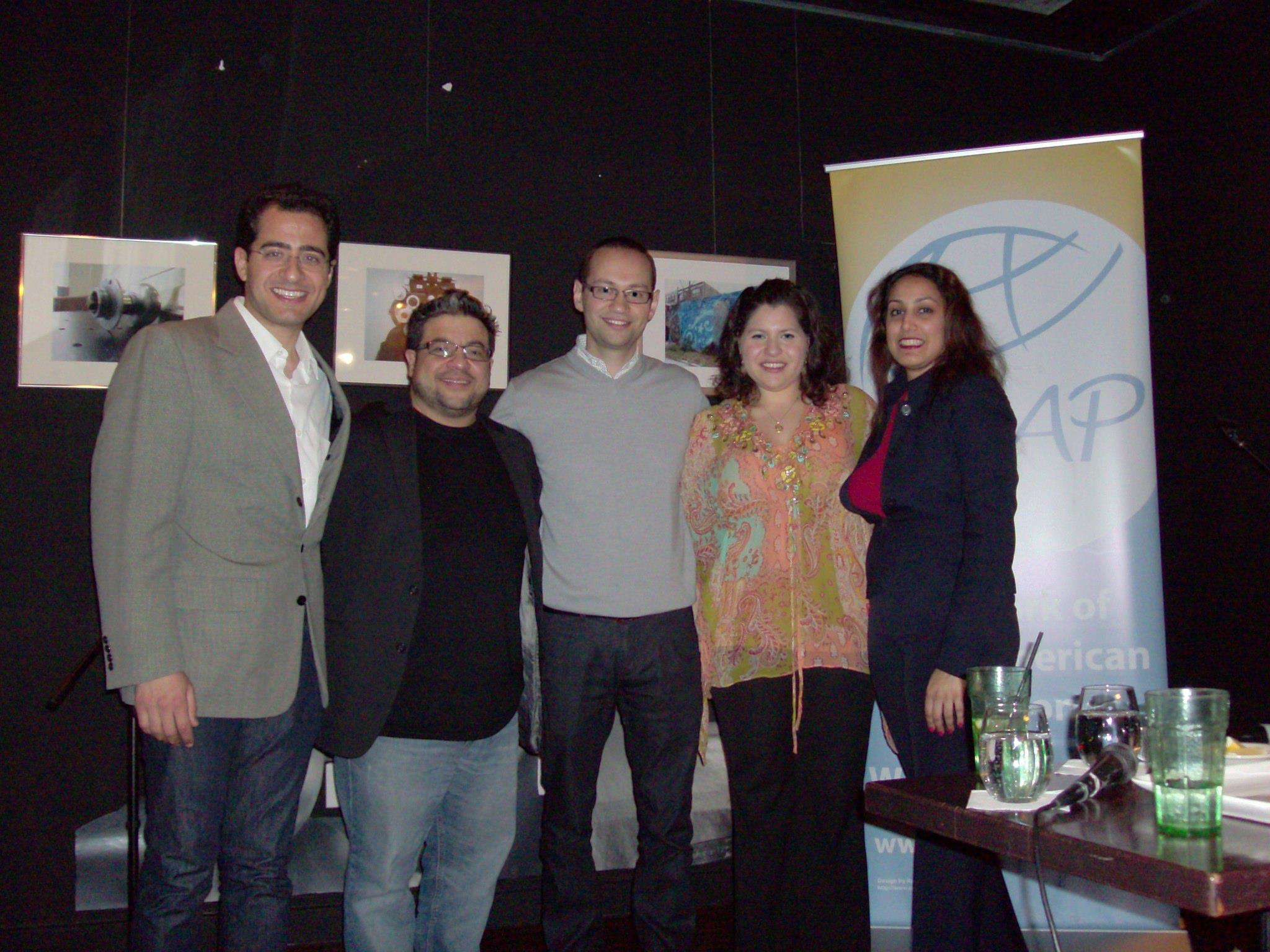
Media focus on the heterogenous aspects of Syrian society, “Alawi minority versus the Sunni majority…BUT it’s not 10% vs. 90%, which is a silly game,” stated Dr. Bassam Haddad, an academic writer of the Syria’s contemporary politics. On Thursday, March 1, 2012, The Network of Arab American Professionals, Washington, DC Chapter (NAAP-DC) and Jadaliyya, an e-zine, co-hosted a dialogue on the Arab Awakening in Egypt and Syria. Held at Busboys & Poets, 5th Street location, NAAP-DC invited Bassam Haddad and Hesham Sallam to highlight the protest movements and their distinct developments regarding political oppositions.

The room was packed with both Arab Americans and non Arab Americans: over 100 attendees had their questions answered by Haddad and Sallam. Dialogue covered the socio-economic struggles, the Muslim Brotherhood, the Supreme Council of the Armed Forces (SCAF), and the Free Syrian Army. Haddad addressed the following points regarding Syria:
1) What is the key component?
2) Why is the regime still resilient?
3) What explains the stalemate?
4) Where is the uprising going?
Pictures may be

NAAP-DC co-sponsors with Jadaliyya: Diaogue on Egypt & Syria at Busboys & Poets

viewed here.

Highlights:

~Haddad stated, “Assad regime is far more coherent and cohesive than its counterparts in other Arab countries which had uprisings.”

~Sallam summarized, “revolutions don’t make demands or requests–they make things happen as seen in Egypt where we are seeing ‘transformative social change’.” Essentially, the biggest challenge is not just ending SCAF rule and influence. Rather, he concluded that ending Egypt’s military rule entails more than presidential elections even. Specifically, ending SCAF’s rule is about giving constitution and Egypt’s parliament more depth–not just the rhetoric.

~Haddad warned that arming the opposition in Syria is a double edged sword while sharing that Israel appears ambivalent about the current engagement with Syria. For instance, he related reports about weapons flowing into Syria have originated from Syrian military deserters, Lebanon, Turkey, Iraq, Jordan similar. Ironically, he noted, the inflow of weapons compares to the US experience when it complains about US-Mexican border issues regarding the drug trade. In a nutshell, if even the most advanced military has difficulty in monitoring its borders with one country, how can a nation like Syria monitor its border with three neighbors that have different interests at stake? In a similar vein, Gulf Cooperation Council countries, like Saudi Arabia (KSA), have an interest in supporting different groups in Syria as well. Although, KSA has denied efforts to directly arm Syrians, according to the Wall Street Journal.

Questions from the audience did not shy away from the controversial issues. For example, Human Rights attorney and activist, Noura Erakat asked Sallam which sectors the Supreme Council of Armed Forces in Egypt would be willing to let go as Egypt transitions into a more transparent, accountable society. Traditionally, the SCAF has controlled certain sectors of Egyptian economy. However, the exact ownership statistics waver between 30 percent or higher–depending on how one defines military ownership.

Also, Bassam responded to the costs and benefits of arming the opposition in Syria, as Secretary Clinton has worried out loud about last week as senior Republican senators, like Lindsey Graham, call for action.

Speakers Bio:

Bassam Haddad is Director of the Middle East Studies Program and teaches in the Department of Public and International Affairs at George Mason University, and is Visiting Professor at Georgetown University.
~Wrote Business Networks in Syria: The Political Economy of Authoritarian Resilience.
~Editing a volume on “Teaching the Middle East After the Arab Uprisings.” Bassam serves as Founding Editor of the Arab Studies Journal a peer-reviewed research publication and is co-producer/director of the award-winning documentary film, About Baghdad.

Hesham Sallam is co-editor of Jadaliyya e-zine and a doctoral candidate in government at Georgetown University.
~Focuses on Islamist movements and the politics of economic reform in the Arab World.
~Affiliated with the United States Institute of Peace, Middle East Institute, Asharq Al-Awsat, and the World Security Institute.

NAAP-DC

Notable attendees included: Andy (Anas) Shallal, Busboys & Poets owner, and activist; Adel Iskander, Adjunct Faculty at Georgetown University; Noura Erakat, Human Rights attorney; Zohra Benhamida, local artist; Nermin Abdel Wahab, Activist; Ramah Kudaimi, Journalist; Sarah Hassaine, Journalist and Laila Mokhiber, Arab American Anti-Discrimination Committee.

Leave a Comment

Filed under Analysis, Interests, Politics, Uncategorized

Libya: Lessons Learned?

For the last 4 weeks, PITAPOLICY has reflected upon North African countries, or the Maghreb region as the US honors Black History Month with respect to the African American community. In this last week, we will profile Libya by including some responses by Control Risks, a global consulting firm that reviewed the potential business environment for Arab countries in transition. The Arab countries in transition are generally linked by the common experience of the Arab Awakening that ignited in Tunisia back in December 2010.

PITAPOLICY contributors reviewed the Maghreb region in this order looking at the political and economic forces that have changed–or remain unchanged.

Week One – Algeria “Algeria & The Arab Spring: Why It’s Not Next.” by Sarah Hassaine
*Note: Coincidentally, a few weeks later, Johns Hopkins University presented a panel on Algeria: Why It’s Not Next.

Week Two – Egypt “Ding Dong the Pharoah’s Gone” by PITAPOLICY Founder, Mehrunisa Qayyum

Week Three – Tunisia Before Ben Ali Coup: Opening a Small Business Outside of Tunisia by PITAPOLICY

Week Four – MoroccoMoroccans Keep Rockin’ Your Rights” by Anonymous

Week Five – Libya As we wind up our Maghreb showcase, PITAPOLICY is happy to close with Libya. Control Risks is based in London, but operates several Middle East offices (Abu Dhabi, Islamabad, Al Khobar, Basra, Baghdad, Dubai, Islamabad, and Kabul) with its Maghreb focus operating from its Algiers office.

Background:
Libya is an upper-middle income country and represents an economy that has relied on oil to sustain its political structure even before Muammar Gaddhafi took power in 1969. There is no data on Libya’s external debt or economic policy.

With a population of about 6.7 million people, Libya is made up of about 97 percent Arab and around 2.5 percent Berber–which is an ethnic group that also resides in Morocco, Algeria, and Tunisia. Libya’s population growth is a little over the global average: 2.9 children born per woman with a trend towards urbanization that is not yet on par with Tunisia and Egypt, according to the World Bank’s MENA Blog.

Despite Libya’s upper-middle income status, health indicators do not stand on par with other upper-middle income countries. For example, Libya’s mortality rate for ‘children under five’ falls below average in both the upper-middle income cohort as well as the Middle East & North Africa region. As such, it will be of keen interest to see how the new National Transitional Council will take steps to invest in its next generation’s education AND healthcare service delivery.

Interview with Richard Fenning, CEO of Control Risks:

MQ: How would Control Risks classify Libya regarding political risk?

RF: We consider political risk in Libya to be high given that the political system remains influx and the state attempts to redefine itself and reestablish central authority. Central government is likely to remain weak, with a range of non-state actors and informal powerbrokers likely to impact on investors’ operations. Given the early stages of the transitional process, the impact of factionalism and corruption investigations on investors remains speculative but arbitrary shifts in policy and contract repudiation remain significant risks.

MQ: Regarding Libya, has the political risk increased or decreased as it shifts from an authoritarian structure to a transitional council? Please explain Control Risks’ reasoning for classifying Libya in this way.

RF: Our political risk rating was raised from medium to high following the uprising in Libya; given the uncertainties discussed above it is likely to remain high until the latter end of the transitional process. Although the former government was known for capricious policy formation it provided investors with greater stability and certain, however fragile given its structural position and legitimacy, than the current transitional process. However, the institutionalization of the rule of law and the development of meaningful state institutions over the transitional process, which remains credible but very challenging, would see a reduction in the political risk rating.

MQ: I noticed that there is only one North African office hub, which is located in Algeria. Would you say that Algeria presents the best foreign direct investment environment even though it is not an Arab country in political transition like its Arab Awakened neighbors? Please explain.

RF: We consider political risk in Algeria to be high, on par with Libya but higher than the medium rating for Egypt and Tunisia. Algeria’s business environment has significantly deteriorated in recent years, notably as a result of the restrictions on foreign ownership that have been imposed since 2009 on new projects in the non-oil economy. Compulsory majority Algerian ownership has deterred new investment, and the authorities have struggled to attract enough companies to carry out large public-investment projects. The authorities have put pressure on some companies to retroactively adopt the 51:49 model on existing entities without any sound legal basis. This has discouraged established investors from expanding their activities in the Algerian market, despite the high potential in the country, which remains the largest in the Maghreb in terms of population. There are no signs that the authorities intend to revise these provisions in the short-to‑medium term. However, companies face persistent risks associated with pervasive corruption, contract frustration, bureaucracy, currency inconvertibility, and the deep politicisation of the business environment.

Note: PITAPOLICY would like to thank Control Risks for sharing its overview at the National Press Club on February 7th. Next week will kick off the March theme of Technology in the ‘pita-consuming’ region to prepare for observing the Arab Net conference.

1 Comment

Filed under Analysis, Interests, PIDE (Policy, International Development & Economics), Politics

DC Gallup Briefing on Egypt

On February 22, Wednesday, PITAPOLICY Consulting attended Gallup’s Washington, DC Briefing provided bySenior Analyst, Mohamed Younis. For the last 3 weeks, PITAPOLICY has reflected upon North African countries, or the Maghreb region as the US honors Black History Month with respect to the African American community.

Week One – Algeria “Algeria & The Arab Spring: Why It’s Not Next.” by Sarah Hassaine
*Note: Coincidentally, a few weeks later, Johns Hopkins University presented a panel on Algeria: Why It’s Not Next.

Week Two – Egypt “Ding Dong the Pharoah’s Gone” by PITAPOLICY Founder, Mehrunisa Qayyum

Week Three – Tunisia Before Ben Ali Coup: Opening a Small Business Outside of Tunisia by PITAPOLICY

Week Four – MoroccoMoroccans Keep Rockin’ Your Rights” by Anonymous

Week Five – Libya scheduled February 29th, Wednesday

As we wind up our Maghreb showcase, PITAPOLICY would briefly like to comment on Gallup’s overall Egypt findings with respect to its time series data (a unique development that has not been documented by other global polling consultancies) by reposting one of the most controversial political economy debates in the Arab world: U.S. Economic Aid.

~Egypt’s desire for closer relations with the US exceeds its approval of US leadership. The earlier rejection of IMF loans was a symbolic gesture.

~Most Egyptians are in agreement that delaying presidential elections would be a bad thing, which isn’t matching the “rhetoric” in media. However, PITAPOLICY remains unclear to what extent non Arab media are focusing on the downside of elections in contrast to Arab media.

February 6, 2012
Most Egyptians Oppose U.S. Economic Aid
Most favor aid from Arab nations
By: Ahmed Younis & Mohamed Younis
Source: Gallup

LOS ANGELES — About 7 in 10 Egyptians surveyed by Gallup in December 2011 oppose U.S. economic aid to Egypt, and a similar percentage opposes the U.S. sending direct aid to civil society groups. This rebuke of U.S. financial support may be a challenge for Egypt’s newly elected parliament and its future president as the government attempts to bolster the nation’s financial stability.

Political and economic turmoil has characterized the first year in Egypt after the fall of former President Hosni Mubarak. This instability has increased unemployment in Egypt, widened its budget and balance of payment deficits, and drained its foreign reserves.

Senior U.S. officials announced in January at the World Economic Forum in Davos, Switzerland, that President Barack Obama plans to speed up aid to Egypt as the nation transitions from the Mubarak era. Congress already approved $1.3 billion in military aid and $250 million in economic aid for the current fiscal year. Some of the conditions attached to this aid, including that it may not be spent unless Egypt meets all obligations under the 1979 Israel-Egypt peace treaty, may help explain its unpopularity in certain Egyptian circles. Some Egyptian activists say such restrictions encroach upon Egypt’s sovereignty.

Egyptians are much more willing to receive aid from international institutions, with 50% favoring this type of help. Egypt’s military and political leaders initally rejected an offer of support from the International Monetary Fund (IMF) but later changed their minds. Last month, Masood Ahmed, Director for the Middle East and Central Asia Department for the IMF, was in Egypt to discuss a potential $3.2 billion IMF loan to Egypt. Egyptian leaders’ ability to attract foreign aid and investment will be important to collecting the capital needed to move the nation’s economy forward.

Egyptians are nearly as likely to favor aid from Arab governments as they are to oppose help from the U.S. Almost 7 in 10 favor aid from Arab governments.This may in part reflect high-profile announcements by several of the country’s Arab neighbors about their involvement in projects to help rebuild Egypt’s economy.

However, some Egyptian politicians have begun to voice concerns about collecting on their neighbors’ promises. Fayza Abouelnaga, Minister of Planning and International Cooperation in Egypt, recently noted that her country had received only $500 million of the $3.7 billion promised by Saudi Arabia and $500 million of the $1.5 billion pledged by Qatar. Further, she said the United Arab Emirates has paid none of its promised $3 billion. Abouelnaga estimated in December that Egypt’s foreign debt reached $34.4 billion, representing 15% of its gross domestic product (GDP).

Implications

As Egypt’s new parliament begins its work and the country’s citizens prepare for presidential elections, many Egyptians are suffering from the day-to-day realities of unemployment and price inflation. According to Gallup’s most recent survey in December 2011, Egyptians are most likely to name inflation and lack of money as the biggest problem facing their families; the second is lack of jobs.

The new government’s ability to fashion policies that will turn the economy around and give Egyptians hope will largely determine its success. The anniversary of the revolution passed without major violence — an indicator of stability that some sources say reverberated positively in the Egyptian stock market. This is a hopeful sign for a nation struggling to negotiate the politics of international aid.

Financial aid can in some cases provide badly needed capital for economic empowerment and development, and ultimately help boost foreign investment and trade. With financial support from the U.S. deeply unpopular among the Egyptian people, the country’s political and business leaders may be forced to focus on other aid sources. International organizations will play a significant role in the process of helping Egypt marshal resources and expertise for development in a way that the Egyptian public supports at this crucial stage in the country’s transition.

For complete data sets or custom research from the more than 150 countries Gallup continually surveys, please contact SocialandEconomicAnalysis@gallup.com or call 202.715.3030.

Survey Methods

Results are based on face-to-face interviews with 1,077 adults, aged 15 and older, conducted Dec. 16-23, 2011, in Egypt. For results based on the total sample of national adults, one can say with 95% confidence that the maximum margin of sampling error is ±3.4 percentage points. The margin of error reflects the influence of data weighting. In addition to sampling error, question wording and practical difficulties in conducting surveys can introduce error or bias into the findings of public opinion polls.

For more complete methodology and specific survey dates, please review Gallup’s Country Data Set details.

3 Comments

Filed under Analysis, Interests, PIDE (Policy, International Development & Economics), Politics

Afghanistan: Right to Protest?

Dear Pita-Consumers:

Today’s post on Afghanistan is prompted by PITAPOLICY’s number one fan: its first subscriber. She brought to my attention Afghanistan’s protests regarding another Quran burning incident last week. One may argue that the protests are based on socio-economic reasons. However, others, such as hardliners, might argue that the protests are rooted in anti-American sentiments–and have nothing to do with economic challenges. PITAPOLICY will analyze this more in depth before writing a formal assessment.

PITAPOLICY has tried to address each of the ‘pita-consuming’ countries in a timely fashion. Each month, a theme has been selected: 1) August-Islamic Finance, 2) November/December- MENA Women Entrepreneurs, 3) February – Maghbreb counries, including Syria updates. (PITAPOLICY’s March 2012 theme will feature technology in MENA each Wednesday.) However, none of these themes included other ‘pita-consuming’ countries like Afghanistan and Pakistan. This is partially my fault, but it is also because the political economy issues for the latter two countries overlap with the deteriorating security situation vis a vis the military-industrial complex, or the relationship between industry and national security. Unfortunately, PITAPOLICY addressed the issue of the military-industrial complex only once.

In September, Preacher Moss touched upon certain aspects of the military-industrial complex. Nonetheless, PITAPOLICY fell short of providing a concrete example. To better understand Afghanistan and Pakistan political economy dynamic, PITAPOLICY invites a response from among its followers. We only ask that you read the following piece first before submitting a piece to info@pitapolicyconsulting.com or pitapolicy@gmail.com. Thanks for your patience as PITAPOLICY gathers more insight into the contemporary challenges of these two countries…

Quran burning incites deadly riots in Afghanistan

By HEIDI VOGT, Originally written for Associated Press

KABUL, Afghanistan (AP) — Clashes between Afghan troops and protesters angry over the burning of Muslim holy books at a U.S. military base left at least seven people dead and dozens wounded Wednesday as anger spread despite U.S. apologies over what it said was a mistake.

The demonstrations across four eastern provinces illustrated the intensity of Afghans’ anger at what they saw as foreign forces flouting their laws and insulting their culture.

The violence was also a reminder of how easily Afghan-U.S. relations can deteriorate as the two countries work to forge a long-term partnership ahead of the withdrawal of foreign forces in 2014.

The unrest started Tuesday when Afghan workers at the main American military base, Bagram Air Field, saw soldiers dumping books in a pit where garbage is burned and noticed Qurans and other religious material among the trash.

The top U.S. and NATO commander, Gen. John Allen, quickly issued an apology and telephoned President Hamid Karzai and major news organizations to explain that a collection of religious materials, including Qurans, had been mistakenly sent to be incinerated. As soon as someone realized what they were burning, they stopped and retrieved what was left, Allen said.

Four copies of the Quran were burned before the incineration was halted, according to initial Afghan government reports.

Anger about the burning spread overnight. A single demonstration outside the Bagram base on Tuesday gave way to three protests in the capital, Kabul, on Wednesday, along with demonstrations in the major eastern city of Jalalabad and in Logar and Parwan province, where Bagram is located.

In Kabul, about 2,000 people massed outside a heavily guarded housing complex for foreigners, chanting “Death to America!” as they hurled rocks at the compound’s reinforced walls and set a fuel truck ablaze. The complex — known as “green village” because it boasts security equal to a military base — houses foreign contractors, police and some coalition military forces.

Eighteen-year-old Mohammad Shaker said he first heard about the Quran burning on Tuesday, and he and other members of his mosque decided to take to the streets Wednesday after morning prayers.

“This is not the first time they’re doing these things. They are killing civilians and taking photos of them. Every day they kill civilians with airstrikes. We can’t accept their crimes in our country,” Shaker said.

The demonstrations prompted the U.S. to lock down its embassy and bar its staff from traveling.

By nightfall, seven people had been killed — four in Parwan province and one each in Kabul, Jalalabad and Logar province, and dozens were wounded, the Interior Ministry said. In some cases, security guards or police were accused of shooting protesters, while in others, officials said the shooting started from within the mob of demonstrators.

The country’s council of Muslim clerics called the apologies from U.S. authorities insufficient and said military officials should punish those responsible.

“Disrespecting religious materials is never acceptable,” the council said, condemning what it called an “un-Islamic and inhumane act.”

Afghanistan’s president called on Afghans to stay calm.

“The people have the right to protest peacefully, but I appeal to my countrymen not to resort to violence,” Karzai said in a statement. He also urged the Afghan security forces to protect the protesters, not battle them.

Karzai said he shared the Afghan people’s pain at hearing of the Quran desecration, but asked them to stay calm.

“Please be patient and wait for the end of the investigation,” Karzai said.

NATO and Afghan investigators visited the Parwan detention facility Wednesday.

German Brig. Gen. Carsten Jacobson said the international coalition would issue a “very clear statement” of what happened and those responsible would be held accountable. He said the incident had “grave implications” for the war effort.

Gen. Martin Dempsey, chairman of the U.S. Joint Chiefs of Staff, told reporters he was hopeful he incident would not rupture relations with the Afghan government.

“It wasn’t intended in any way to be an act of malice toward a particular religion or its practices,” Dempsey said at a Navy base in Florida. Asked whether NATO troops were in greater danger as a result of Afghan outrage over the Quran burning, he said: “This event raises my concern, sure.”

U.S. officials said the materials had been taken from the shelves of a detention center library because they contained extremist messages or inscriptions. The White House said it was an accident that they were sent to be burned.

Karzai, however, appeared ready to use the uproar to his political advantage.

When Deputy Defense Secretary Ash Carter called with an apology, the Afghan leader said the incident could have been prevented if Afghans were in charge of the detention center.

“The sooner you transfer the prison, the sooner you will be able to avoid such problems and unfortunate incidents,” Karzai told Carter, according to a statement provided by the president’s office. Karzai has set a March 9 deadline for the U.S. to hand over control of the Parwan detention facility adjoining Bagram, but the Americans have said so far the Afghan justice system is not yet capable of overseeing the operation.

Adding to the heightened anti-foreigner sentiment in Afghanistan, Taliban spokesman Zabiullah Mujahid issued a statement Wednesday encouraging the nation’s youth to join the insurgency, not the ranks of the Afghan security forces.

Mujahid said the Taliban has ordered all its commanders to embrace and protect the families of any Afghan policeman or soldier who turns his gun on foreign troops. “Call them heroes,” he said.

A rising number of Afghan security forces, or militants wearing their uniforms, have shot and killed U.S. and NATO service members. On Monday, gunmen in Afghan police uniforms opened fire on NATO troops in southern Afghanistan, killing an Albanian soldier. Last month, France suspended its training program and threatened to withdraw its forces a year ahead of schedule after an Afghan soldier shot and killed four French soldiers on a base in the east.

Associated Press writers Amir Shah, Deb Riechmann and Patrick Quinn contributed from Kabul.

50 Comments

Filed under Interests, Politics

Morocco: Moroccans Keep Rockin’ Your Rights

Every Wednesday in February PITAPOLICY will review a political economy issue regarding a Maghreb country. In the first week Sarah Hassaine reflected on Algeria. The second week focused on Egypt. Last week’s posting explores Tunisia’s business environment for women. This week, PITAPOLICY is posting a guest contributor’s piece on Morocco. Our guest contributor is of Moroccan descent.

Background of Morocco:
The Kingdom of Morocco is a lower-middle income country compared to Tunisia, PITAPOLICY’s country in focus last week. Morocco won its independence from France in 1956. According to the World Bank, Morocco’s literacy rate stood at 56 percent in 2009. Merchandise trade comprises about 58.2 percent of Morocco’s GDP. In 2006, Morocco entered into a bilateral Free Trade Agreement with the United States; currently, Egypt and the US are considering an FTA as well. Morocco’s unemployment rate is estimated at 9.2 percent.

The World Bank presented the following highlights:
Economic Developments & Macro-Economic Outlook

~”The Moroccan economy continues to fare relatively well. Growth was estimated at 4.5 % in the first half of 2011, mostly driven by domestic demand, and is expected to keep its momentum for the rest of the year, with annual 2011 estimated at 4.5-5%. Inflation has been under check at less than 1% by end July (food inflation is higher at 1.4%).” ~World Bank Country Brief.

1) “Unemployment, especially among the youth, remains a critical concern.”

2) “High world prices of basic commodities are putting tremendous pressures on the subsidy system and hence on public finance.”

3)”The slowing growth of Morocco’s main trading partners is exacerbating the weaknesses of the balance of payments.”

4)”The government has launched the preparation of the Budget Law 2012 while its implementation will be the responsibility of the next government.

A Moroccan-American’s POV
In 2011, Tunisia gave birth to the Arab Awakening. Egypt became the face of the uprisings; and Libya joined in arms. As I watched this unfold, I couldn’t help thinking, would Morocco join as well?

Morocco is rarely on the news. In fact, the only time you see or hear about Morocco is when a rare bombing has detonated and robbed the lives of innocent bystanders in a major city to the credit of terrorist groups; Anthony Bourdain taking a bite of the Sahara desert, savoring its immaculate cuisine cooked by Bedouins; or international/Western fashionistas and music artists singing or modeling under the shadows of the red city, Marrakesh. Most Arabs don’t think Moroccans are Arabs because of their language (but don’t get me started on that).

Amidst all of these common stereotypes, where was the political activism?

Well, it was steeping like a nice hot glass of Moroccan tea (yeah, I had to throw in the cheesy pun).

After a month or so, Moroccan youth did follow in the footsteps of their fellow revolutionaries or what I like to call, “reformers” in the MENA region. About a year ago, Moroccans launched a YouTube video on February 20th, 2011 which represented how various Moroccans across different ages and ethnicities–Arabs and Berbers–voiced their opinions and encouraged everyone to go to the streets and demand change (economic justice and opportunities, and ridding nepotism, to just name a few).

The King responded quickly by introducing new constitutional reforms and held snappy elections. Despite all of this, the King and his closest advisers still have a strong grip to their power. In a country, where the walls have ears, anything said by anyone against the monarchy and current regime risk tremendous repercussions (e.g. disappear and be thrown in jail, never to heard of again—yes, just like Hollywood movies).

But before we dramatize here, it’s important to understand the situation in Morocco is slightly different from its Arab neighbors. According to an interview done by NPR, Moroccan businessman, Karim Tazi claims most Moroccans are not seeking to get rid of the monarchy (a similar scenario in Jordan), but changing it’s authoritarian ways and allowing more participation of the people. In other words, while the rest of the Arab revolutions consisted of throwing out an entire government and beginning from scratch, Moroccans want to keep the monarchy but modify it so that it better serves them.

Hmm, that’s interesting. Perhaps, they would like the European model; keeping the monarchy symbolic and part of the country’s culture and traditions. Remember Morocco differs from its neighboring countries since it still managed to preserve its cultural customs, languages, and traditions of the monarchy despite it’s occupations from France and Spain.

Two days ago marked the one-year anniversary of the February 20th video-posting. Since then, not much has changed. Moroccans are still out protesting; in fact, five young men lit themselves on fire last month. Unfortunately, there is not much media attention given to the unrest there. Why? Because in the journalism world, it’s not “sexy” enough. “Sexy” being that these people are not being killed or massacred in the hundreds like in Syria. The point is it’s important to continue to keep an eye on the entire region because this is not about the glamorous horror stories you hear or see, it’s about trying to support change in the MENA region.

Note: The author welcomes comments and discussion by posting comments below in response to this piece. In the meantime (As always) PITAPOLICY looks forward to receiving pieces on Libya, Mauritania and Sudan for the remainder of February. Please submit to pitapolicy@gmail.com

6 Comments

Filed under Interests, Politics, Uncategorized

HDI, Gender Gap Index, Gender Parity Index: None incorporate Iraqi women’s conflict management efforts

The answer is ‘False’. By 1979, Iraq represented the most educated population in the ‘pita-consuming’ region. According to a study by , the illiteracy rate among Iraqi women dropped from 91 percent in 1957 to an astounding 12 percent in 1990. However, by 2003, three wars, over a decade of sanctions, and continuous bombing of infrastructural facilities, led to a decrease in Iraq’s Human Development Index. Unfortunately, within one generation, women’s illiteracy rates reverted back to over 30 percent in 1997. The most striking statistic: in 2007, Iraqi women’s illiteracy rate (and unemployment rate) skyrocketed to nearly 50 percent in most Iraqi Governates.

In addition to the Human Development Index, other sources of reviewing the social and economic impact of gender on an economy include the following:
1) The Organisation of Economic Cooperation and Development compiles the Social Institutions and Gender Index.
2) The World Economic Forum compiles the Global Gender Gap Index.
3) The United Nations‘ Millennium Development Goals track the Gender Parity Index.
Overall, none of these key indices incorporate women’s conflict management role, participation, or success as highlighted in the piece below regarding post-conflict Iraq previously published by Altmuslimah e-magazine.

BY MEHRUNISA QAYYUM, FEBRUARY 15, 2012

“Violence emanates from the man, so we have to have projects that make him aware of this circumstance,” said Zainab Sadeq Jaffer, an Iraqi human rights attorney who presented at the US Institute for Peace Conference entitled “Women Fighting for Peace”. Others may argue that violence is not a gendered concept, but in a post-conflict country such as Iraq addressing specific trends in aggressive behavior has become vital.

Gender violence in conflict zones can stem from a multitude of factors – societal customs, ideologies, stress, as well as government and non-government actors participating in the conflict. As a result, Iraq has seen an increase in the rate of domestic violence during periods of recession and war. Post-conflict Iraq does not represent only a society of war victims. Iraq experienced repression by an authoritarian regime, in which “low-grade” conflict pushed both men and women to take out their aggression on one another in a “battle of the sexes.”

During Iraq’s authoritarian rule, Iraqi civilians had to enlist in the military for three armed conflicts, which introduced an aggressive culture as men militarized to survive. The first was the Iraq-Iran War, which claimed over 260,000 Iraqi lives, according to the Global Security Report. The second was the 1990-91 Gulf war, which claimed over 250,000 Iraqi lives. The third instance of institutionalized violence required Iraq’s military in the second US led invasion. Additionally, between 1979 and 2003, Saddam Hussein’s rule imposed another layer of violence through torture, random execution, rape, and persecution of minorities – both women and men. Even after Hussein lost power conflict erupted on another macro-scale as Iraqi soldiers and policemen, trained for aggression, were left with few outlets to reengage in civil society. Consequently, unemployment skyrocketed as the remaining soldiers returned home. Click here to continue…

1 Comment

Filed under Interests, PIDE (Policy, International Development & Economics), Uncategorized

Before Ben Ali Coup: Opening a Small Business Outside of Tunisia

Every Wednesday in February PITAPOLICY will review a political economy issue regarding a Maghreb country. In the first week Sarah Hassaine reflected on Algeria. The second week focused on Egypt. This week’s posting explores Tunisia’s business environment for women. As always, PITAPOLICY looks forward to receiving pieces on Libya, Morocco, Mauritania and Sudan for the remainder of February. Please submit to pitapolicy@gmail.com

Tunisia is an ‘upper-middle’ income country with a small, diverse economy. Nonetheless, as seen with the surprising civilian coup of Tunisia’s ex-president Ben Ali, the Tunisian economy did not represent employment opportunities for Tunisians. As Rania Jaziri explains, “Many Tunisians, like my dad, emigrated from Tunisia to Europe to open a business because that was the “Plan B” for many Tunisian men.” However, what about the Tunisian women? According to World Bank data, Tunisian women make up about 28 percent of the participating labor force.

The World Bank Group’s financially focused arm, the International Finance Corporation, compiled the report Women, Business and the Law: “Removing Barriers to Economic Inclusion” measures to what extent women are able to participate in the formal economy in 141 countries. The reason for the Women, Business, and the Law 2012 report boils down to the 2010 observations from the World Economic Forum: although 93 percent of the gender gap in education has been eliminated, the gender gap in economic participation persists at 41 percent. The World Economic Forum designed the Global Gender Gap Index.

The level of participation and the barriers to economic inclusion are represented by ‘gender parity’. Although not all aspects of women’s freedom are covered by ‘gender parity’, the report uses the paradigm of formal legal and regulatory environment for women to manage their own businesses or find/maintain jobs. Women, Business, and the Law report factors in six indicators to assess ‘gender parity’ in the 141 economies. The six include: 1) Accessing institutions; 2) Using property; 3) Getting a job; 4) Providing incentives to work; 5) Building credit; and 6) Going to court. A more comprehensive explanation outlines the methodology of how the World Bank study captured each of the six indicators.

Out of the 141 countries reviewed, Tunisia was only 1 of 2 countries that improved ‘Gender Parity’ by reforming Tunisian women’s ‘access to institutions’. By ‘access to institutions’ Tunisian women can do the same, regardless of her marriage status:
• apply for a passport in the same way as a man
• travel outside the country in the same way as a man
• travel outside her home in the same way as a man
• get a job or pursue a trade/profession in the same way as a man
• sign a contract in the same way as a man
• register a business in the same way as a man
• confer citizenship on her children in the same way as a man
• open a bank account in the same way as a man.
Ironically an unmarried woman can choose where to live in the same way as a man, whereas a married Tunisian woman cannot. Yet, in 2010 Tunisia reformed its nationality law to allow women to pass on citizenship to their children in the same way as Tunisian men.

Small Business Experience of a Tunisian-German Woman
By: Mehrunisa Qayyum

PITAPOLICY had an opportunity to interview Rania Jaziri, a small business woman, whose parents emigrated from Tunisia to Germany. Rania reflects on the process of setting up her small business, Jordin’s Paradise Dance & Fitness Studio, in Washington, DC as we discuss the challenges for women setting up a comparable business in Tunisia.

Like many Tunisians, Rania’s parents represent the over 1 million Tunisians who left Tunisia for opportunities abroad. The Jaziris immigrated to Germany, which experience the largest influx of Tunisian migration compared to France and Italy–the traditional hubs of Tunisian immigrants. To put the 1 million in context: this represents about 10 percent of Tunisia’s total population. According to Tunisia’s Consulate data: Tunisians’ propensity to emigrate dramatically increased between 2001 and 2008 despite the liberalized reforms undertaken by ex-president: Zine Albedine Ben Ali.

Rania Jaziri smiles at her latest business challenge: her clients and staff have outgrown the space of Jordin’s Fitness. As Rania gets off the phone after receiving an invitation to coordinate a fitness workshop for a large company in DC, I see how her business plan has expanded beyond offering a couple of dance classes. She is a business owner who literally boosts the morale of her clients and staff while ensuring that they move their feet. Her regular attendees insist on hosting a post-class snack fest. One of the members operates a local bakery and shares cupcake pops and business cards as other attendees get their Body Mass Index measured. Other clients approach Rania to partner up in an upcoming event showcasing other small business women. Jordin’s Fitness has won “Best New Business in Shaw in 2010” and her clients voted JP as “Best Dance company”.
How does a fitness studio morph into a regular networking venue for attorneys, economists, writers, and new entrepreneurs who look up to Ms. Jaziri?

(MQ): What is Jordin’s Paradise and your business philosophy?

(RJ): Jordin’s Paradise is a dance and fitness studio in an up and coming neighborhood of Washington, DC. We offer classes in yoga, kickboxing, bellydance, pilates, and a variety of others based on our members interests because my philosophy is to enhance the mind, body & soul.

(MQ): As a German woman of Tunisian descent, what were your influences in establishing Jordin’s Paradise? Are any cultural influences of Tunisia?

(RJ): DC follows the trends by having a variety of yoga studios, kickboxing gyms, and dance studios. But they are all operate separately. A cosmopolitan woman in DC cannot find the one stop shop to address her needs for both physical and mental fitness. I have an instructor, who is a former marine, who teaches kickboxing for women to learn self-defense skills.

Also, I wanted to create a space where people can have fun, learn mind-easing techniques through my laughing yoga class, and meet others. Jordin’s Paradise Fitness members include many young professional women who network after a dance class, for instance.

With respect to my Tunisian heritage, belly dance represents one aspect. But this trendy tradition goes beyond Tunisia as the larger Middle Eastern culture. These are not just physical movements. It is the spirit in which women convene and feel safe in this public space of exploring other cultures.

(MQ:) What steps did you take to establish Jordin’s Paradise?

(RJ): In January 2009, I came up with the concept. I looked for a space in June and by October, I found a space to rent in the Shaw neighborhood.

I wrote my business plan with the help of my significant other. I hired an attorney to help me procure a lease for the studio, but my legal needs changed, so I retained a attorney, Paul Strauss, who had more experience and people skills. (Paul is the “shadow representative” of DC where he represents but does not vote.)
Jordin’s Paradise opened in January 2010.

(MQ): How many permits/license?

(RJ): I only needed a few permits: the general Business Administration license to operate the studio. As an instructor, I had been working on earning my various certifications in personal training and group exercise instruction. Getting certified in CPR and first-aid was not challenging–and actually is almost must for business women who employ staff.

The types of classes I offer reflect my experience as a German-Tunisian woman. I completed my university education in the Math & Sciences track, so knowledge of anatomy and biology was vital as I instruct in various yoga disciplines.

(MQ): How did you incorporate social media into your promotional and advertising strategy? To what extent was it useful?

(JP:) The easiest, cost-free tool with social media is to establish a Facebook page and a Twitter account–which I immediately did. It is useful once you have the substance put on paper and have testimonials from clients to tweet about your business and highlight on the Facebook page itself. For example, I designed Facebook event invites. JP events provide an opportunity to organize “Flash Mobs” where new faces discover us and sign up for a performance. Anyone can sign up for flash mob performance. If they like it, (which is a given), they inquire about JP’s class schedule. Voila: JP has enlisted new clients!

Initially, however, that was not enough for me. I researched opportunities on Groupons. For example, I approached Daily Deals and Social Living to negotiate a package of classes that internet users could enjoy. It required a little back and forth negotiation, but I am a businesswoman, so this was a great “mental exercise” in that we agreed upon set of classes with a price that afforded gains to both the advertisers and to the studio that paid off in the end. I built a membership following from that.

(MQ): How was your experience in accessing financial capital?

(RJ): Personally, I do not believe in starting from credit and operating towards debt. I know in American culture access to credit facilitates taking risks, which ultimately helps in opening a business. Perhaps this is because of my German background in focusing on what finances are in my hand. Or maybe this is partially reflective of my my Tunisian father’s business style. In both Germany and Tunisia, people frequently operate in a cash environment. Either way, I saved a lot from my earlier career as an au pair in DC. I did not spend what I did not have in my hand. The up side: I had great credit! However, there was a down side: excellent credit can be a roadblock. In my case, I did not have a credit history, which was the reason three banks turned me down for a business loan. In hindsight, it was probably good that three banks said no. I made sure that what I offered was what could be sustained–then built from there.

(MQ): You have frequently visited Tunisia–almost every year. Do you ever think of opening up a Jordin’s Paradise there considering that the World Bank ranks Tunisia the highest in terms ‘gender parity’ among MENA countries?

(RJ): I would love to carry on the concept of mind, body, and soul fitness to Tunisia. There will be challenges as a woman, as someone who teaches unconventional classes like pole-dancing, but belly dancing was once considered unconventional here in the US. There will be challenges just being an entrepreneur! Nonetheless, I have the risk taking mindset. Let’s see!

Rania’s handshake is the hug. She hands me a bag full of clear stones and insists I see myself in the clear stone. As I grab a “happy stone” from her mind easing bag, it says “You’re a Star”. As a new entrepreneur, I hope this applies to PITAPOLICY as it approaches its 9th month as a blog and 6th month as a Consulting business. Rania and I hope that in a few years, PITAPOLICY can re-interview her when Jordin’s Paradise has a studio in Tunisia.

Note: Follow Jordin’s Paradise @JordinsParadise.

19 Comments

Filed under Analysis, Interests, PIDE (Policy, International Development & Economics)